TL;DR: Hair loss in women is usually caused by hormonal, nutritional or genetic factors. In many cases, a combination of minoxidil, PRP therapy, nutrient balancing and stress reduction can help. It is crucial to first clarify the underlying cause via blood and hormone tests, for example in specialised clinics such as MediFUE. Early treatment increases the chances of effectively stopping hair loss and stimulating new hair growth.
What Are the Most Common Causes of Hair Loss in Women?
In women, hair loss is most often triggered by hormonal changes, iron deficiency, stress or genetic factors.
The most common causes include:
- Hormonal fluctuations (e.g. after pregnancy, during menopause or after stopping the pill)
- Nutrient deficiencies, especially iron, zinc and vitamin D
- Chronic stress or psychological strain
- Thyroid problems (underactive or overactive thyroid)
- Hereditary predisposition, which can also occur in women, although it is less common
A visit to a doctor and a targeted blood test are essential to correctly identify the cause.
How Does Female Hair Loss Differ from Male Hair Loss?
In women, hair loss is usually diffuse, while men typically experience receding hairlines and thinning at the crown. Women tend to lose hair evenly over the entire top of the head without developing complete bald patches. In men, hair loss often progresses faster and in clearly defined patterns (Norwood scale), whereas in women it is usually more gradual.
Typical patterns in women:
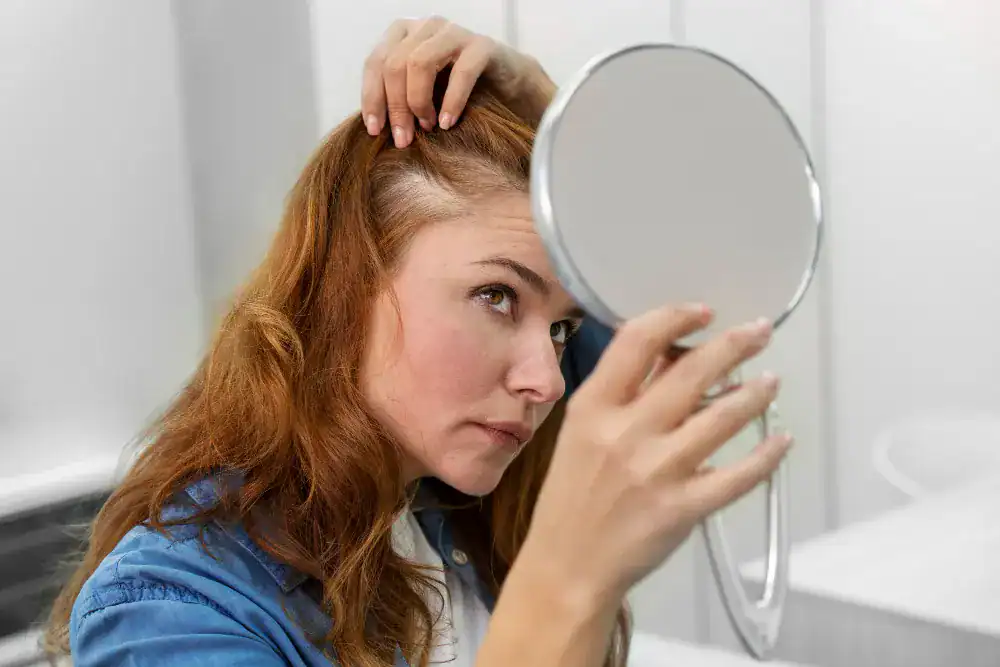
- Thinning hair at the parting
- Scalp becoming more visible, but no bald patches
- Hairline remains intact even though the top becomes thinner
These differences are important when choosing the right treatment approach for example, whether to treat with medication, PRP or, in selected cases, surgery.
Which Types of Hair Loss Occur in Women?
The most common forms in women are diffuse hair loss, hormone-related hair loss and patchy (alopecia areata) hair loss.
Common Types at a Glance:
- Diffuse hair loss: Even hair loss over the entire head, often triggered by stress, deficiencies or medication.
- Androgenetic hair loss: Hereditary hair loss caused by sensitivity to DHT; typically presents as thinning at the parting.
- Alopecia areata (patchy hair loss): Sudden round or oval bald patches, usually caused by an autoimmune reaction.
- Postpartum hair loss: Hair loss after giving birth due to hormonal changes often temporary.
- Hair loss during menopause: Reduced oestrogen levels can lead to thinner hair and increased shedding.
Which Treatments Really Help Women with Hair Loss?
Effective options for women with hair loss include minoxidil, PRP therapy, nutritional therapy and, in selected cases, hair transplantation.
Proven Treatment Options:
- Minoxidil 2% (topical): Improves blood flow, prolongs the growth phase of the hair; well-studied and available over the counter.
- PRP therapy: Platelet-rich plasma from your own blood is injected into the scalp; stimulates hair follicles, especially effective in diffuse hair loss.
- Dietary supplements: Necessary and effective in cases of deficiency (e.g. iron, zinc, biotin).
- Anti-androgens (e.g. cyproterone acetate): Only suitable in clearly hormone-related hair loss and always under medical supervision.
- Hair transplantation: Possible in women with stabilised hair loss in specific areas (e.g. parting); special techniques for female patients are required.
🎯 Important: Treatment should always be based on the underlying cause there is no “one-size-fits-all” solution!
What Can You Do Yourself to Stop Hair Loss?
In the early stages, women can often achieve a lot through targeted hair care, nutrition and stress reduction.
✅ Self-help measures:
- Regular scalp massage: Stimulates blood circulation.
- Use mild, silicone-free shampoos: Less irritation of the scalp.
- Actively reduce stress: For example through exercise, meditation or good sleep hygiene.
- Protein- and vitamin-rich diet: With sufficient biotin, zinc, iron and vitamin D.
- Avoid excessive heat styling & tight hairstyles: Protects and relieves the hair roots.
- Document hair loss: Photos help to track changes over time.
These measures do not replace medical treatment, but they can support and enhance it.
When Should You See a Doctor About Hair Loss?
If hair loss persists for several weeks, visibly increases or is accompanied by other physical symptoms, you should seek medical advice.
📌 Typical warning signs:
- Losing more than around 100 hairs a day over a longer period
- Visible thinning at the parting or round bald patches
- Additional symptoms such as fatigue, menstrual irregularities or skin changes
- Hair loss after starting medication or following illness
- Family history of early or pronounced hair loss
Early diagnosis significantly improves the chances of successfully treating hair loss.
What MediFUE Recommends for Women with Hair Loss
MediFUE recommends an individual root-cause analysis for women, including hormone and blood tests, before starting any treatment.
What MediFUE Specifically Offers:
- Personal initial consultation with hair specialists
- Blood tests to detect deficiencies and metabolic issues
- PRP therapy tailored to female hair loss patterns
- Guidance on medication (minoxidil, and if appropriate, anti-androgens)
- Hair transplantation for women using advanced techniques such as Sapphire FUE
Advantage: Everything takes place in Germany, without language barriers, with local contacts and standardised follow-up care.
Frequently Asked Questions About Hair Loss in Women
What Is the Most Common Cause of Hair Loss in Women?
Hormonal changes for example due to pregnancy, the pill or menopause are among the most common triggers.
Does Minoxidil Really Work for Women?
Yes. Minoxidil is the best-studied medication for female hair loss and, with regular use, results can usually be seen after around 3 to 6 months.
How Long Does It Take for Hair Loss Treatment to Work?
Most treatments take at least 3 months before first results are visible. Full effects often appear after 6 to 12 months.
Which Blood Values Should Be Checked in Hair Loss?
Recommended tests include: iron (ferritin), zinc, vitamin D, thyroid values (TSH), vitamin B12 and, if needed, hormone levels.
Can Hair Loss in Menopause Be Treated?
Yes. Hormone therapy, PRP and/or minoxidil can often slow down or partially reverse hair loss during menopause.
Is a Hair Transplant for Women Possible?
Yes, especially in cases of stable, localised thinning (for example at the parting). A detailed diagnosis and an experienced specialist are essential beforehand.
How Much Does PRP Treatment Cost at MediFUE?
The cost depends on the scope of treatment but is moderate compared to many other countries and includes consultation and follow-up. MediFUE provides a detailed price overview on request.
Conclusion
Hair loss in women is distressing, but in most cases it can be treated effectively once the cause is known. Whether hormonal, nutritional or genetic: the right diagnosis is the first step. Clinics such as MediFUE offer individual solutions with modern methods such as PRP, minoxidil or hair transplantation tailored to the specific patterns of female hair loss.