Elon Musk Hair Transplant Explained – Grafts, Methods & Results

TL;DR: Elon Musk corrected his severe hair loss through at least two to three strategic hair transplant procedures. Experts agree that he used both the FUT (strip method) and the modern FUE technique . With an estimated 4,000 to 6,000 transplanted grafts , he achieved a spectacular transformation—from a Norwood stage 4 back to a full, natural hairline. Elon Musk’s Hair Transformation at a Glance Feature Transformation Details Status Unofficially confirmed (clear photo evidence) Methods Combination of FUT (early) & FUE (refinement) Number of grafts Estimated 4,000 – 6,000 grafts Norwood scale From stage 4 (PayPal era) to stage 1–2 (today) Estimated cost $20,000 – $50,000 (top surgeons in the USA) Number of procedures Likely 2 to 3 sessions over 20 years Naturalness Very high (excellent hairline design) Did Elon Musk Really Get a Hair Transplant? Officially, the tech billionaire has never confirmed that he went under the knife. But in the world of hair surgery, there is no doubt. Hair does not simply grow back on its own with this kind of density in cases of genetically driven hair loss (androgenetic alopecia)—especially not when the receding temples had already progressed as far as his. Experts agree: Musk’s hairline is the result of excellent surgery, likely perfected across multiple sessions over two decades. The Transformation: Elon Musk Hair Before vs. After To understand the change, you have to look at the Norwood scale , which measures the progression of hair loss: Period Status (Norwood Scale) Visual impression Late 90s (PayPal era) Norwood 4 Pronounced receding hairline, significantly thinning hair on the crown. Mid-2010s Norwood 2 Noticeably fuller hairline, first signs of correction. Today (2026) Norwood 1 Perfectly defined hairline, maximum density and volume. Interesting fact: While Musk had lost almost half of his frontal hair in his 20s, his hair today looks denser than it did in his youth. That is only possible through a strategic redistribution of hair follicles (grafts). Which Technique Is Behind It—FUT, FUE, or Both? If you analyze the evolution of Musk’s hair, it becomes clear that he likely had not just one, but multiple treatments using different methods. How Many Grafts Were Needed for This Result? This is the question most patients are desperate to know. To go from an advanced stage like Norwood 4 to a full head of hair requires a considerable amount of donor hair. Experts estimate the number of grafts transplanted in Elon Musk’s case at: In total, approximately 4,000 to 6,000 grafts. These were most likely transplanted in at least two to three sessions : How Much Did the “Musk Hair Transplant” Cost? Elon Musk undoubtedly has access to the most exclusive surgeons in Beverly Hills. While an average hair transplant in Germany or Turkey is significantly cheaper, it is estimated that Musk spent a total of between $20,000 and $50,000 for his transformation. This shows: He didn’t just invest in the number of hairs, but above all in the artistic quality of the surgeon. Why Does Elon Musk’s Result Look So Natural? Many people fear the so-called “doll look”—a hairline that is too straight and looks artificial. With Elon Musk, this mistake was avoided. The secret behind his natural look comes down to three factors: Conclusion: Achieving the “Musk Look”—Even Without Billions The good news is: the technology Elon Musk had to spend a fortune on years ago is standard today. You don’t have to be a tech giant to get a perfect hairline. With modern methods like Sapphire FUE or DHI , which we offer at Medifue , we achieve results today that even exceed the quality of Musk’s earlier treatments—and at a fraction of the cost. The decisive factor isn’t the budget, but the expertise of the surgeon and an understanding of aesthetics. Frequently Asked Questions About Elon Musk’s Hair (FAQ) Does Elon Musk wear a toupee or hairpiece? No. The timeline of changes and the structure of his hair clearly point to a permanent hair transplant. A hairpiece also wouldn’t look so consistent and natural across his many public appearances and different hairstyles. Did Elon Musk take medication against hair loss? It’s very likely. After a transplant, surgeons often recommend medications like finasteride or minoxidil to stop the loss of the remaining, non-transplanted original hair. Without this support, the hair behind the transplanted grafts could continue to thin. Can anyone achieve a result as dense as Elon Musk’s? That depends heavily on the quality of your donor area (donor zone) at the back of the head. If enough healthy donor hair is available, almost any Norwood 4 patient can achieve a similarly dense result. Why did he wait so long before getting the treatment? In the 90s, the methods were not as advanced. Musk likely waited until the techniques (and his bank balance) reached a level he considered acceptable.
Hair Transplant in Turkey vs Germany: Costs, Quality, Safety & Aftercare Compared
TL;DR: The main difference between a hair transplant in Turkey and in Germany lies in the balance of costs vs. comfort . While Turkey stands out with attractive all-inclusive prices and specialized clinics, Germany offers the highest medical standards according to EU guidelines, legal security, and straightforward, personal aftercare without having to travel by plane. Hair Transplant Turkey vs Hair Transplant Germany Criterion Hair Transplant Turkey Hair Transplant Germany Average cost Very attractive (approx. €1,500 – €3,500) More expensive (approx. €5,000 – €15,000) Scope of services Mostly all-inclusive (hotel & transfer) Usually only the medical procedure Standards Internationally certified clinics Strict German medical & hygiene regulations Aftercare Digital / via app over distance In person on site with the treating doctor Travel stress Flight & hotel stay required No travel or a short domestic trip Legal security Turkish legal system German law & local liability 1. The Price Check: Why is Turkey so much cheaper? The most obvious difference is the price. While a hair transplant in Germany often costs between €5,000 and €15,000 , prices in Turkey are usually between €1,500 and €3,500 . Why is that? Important: A low price in Turkey does not automatically mean lower quality. It is simply a location advantage. 2. Quality and Expertise: Volume vs. Class? A common prejudice is that Turkey works “on an assembly line.” But this is exactly where a key advantage lies: the enormous experience. 3. All-Inclusive Package vs. Self-Organization: A Stress-Free Path to New Hair A major advantage of Turkey that many patients underestimate is the organizational comfort. 4. Aftercare and Safety: What happens after the procedure? This is the point where Germany traditionally shines, but modern medical technology has closed the gap. Safety takeaway: If you choose a reputable clinic, you are safe in both locations. The difference is simply in the type of communication – in person on site vs. digital and highly efficient. 5. Direct Comparison: The Pros and Cons at a Glance To make your decision easier, we have summarized the most important factors once again: Criterion Hair Transplant in Turkey Hair Transplant in Germany Costs Very affordable (all-inclusive from €1,500) High investment (from €5,000) Experience World’s highest case volumes & routine High quality, but lower frequency Service VIP transfer, 5-star hotel, interpreter Mostly only the medical treatment Technology Focus on the most advanced methods (Sapphire, DHI) Proven standards, often at an additional cost Aftercare Digital & intensive over 12 months In person on site 6. Why Medifue? The Best of Both Worlds Many patients want Turkey’s low prices and expertise, but hesitate because of the risks of traveling abroad. This is where Medifue comes in. We build the bridge: You benefit from highly specialized surgeons in Istanbul and attractive prices, while also enjoying safety to German standards . Medifue takes care of the complete organization, selection of the best clinics, and seamless aftercare, so you don’t have to worry about quality or communication. Frequently Asked Questions (FAQ) 1. Does health insurance cover a hair transplant in Germany? The short answer: almost never. In Germany, a hair transplant is classified as a “cosmetic procedure” in 99% of cases. This means that neither statutory nor private health insurance covers the costs. So if you stay in Germany, you pay the full price out of pocket. In Turkey it is also a private service, but due to the lower overall costs, the financial burden is significantly smaller. 2. Is flying right after the operation in Turkey dangerous? No, but it requires caution. Most patients fly back 48 hours after the procedure. The biggest concern is cabin pressure and possible swelling (edema). We give you special instructions and provide a headband to minimize swelling. Important: the grafts (the freshly implanted roots) are sensitive in the first 5 days. A neck pillow on the plane is your best friend! 3. Why are more grafts (hair follicles) often transplanted in Turkey than in Germany? It’s a matter of philosophy. In Germany, planning is often more conservative in order to preserve the donor area (back of the head) for any potential future procedures. In Turkey, “mega-sessions” (4,000+ grafts) are often used to achieve a максимально dense result in just one session. Medifue focuses on the golden middle: as much density as possible, and as much safety for the donor area as necessary. 4. What do I do if complications occur after returning from Istanbul? This is the #1 “fear question.” This is exactly where the wheat is separated from the chaff. While with a direct booking you often only have an anonymous WhatsApp contact in Turkey, Medifue offers a local point of contact through its locations in Germany (e.g., Cologne/Mannheim). If you have medical questions or uncertainties, you have experts on site who speak German and coordinate the case. 5. “Budget clinic” vs. premium provider: How do you recognize the difference? Don’t look only at the price! You can recognize a reputable clinic by: 6. How natural does the result really look? (The fear of the “hair-doll look”) The notorious “doll look” is caused by a hairline that is too straight. In Turkey, surgeons have developed an extremely strong feel for natural hairlines thanks to the enormous case volume. In Germany, a lot of time is often invested in individual design planning. The result should be top-notch in both locations – provided the surgeon masters their craft.
Norwood 6 Hair Transplant: Is It Possible to Fix Advanced Baldness?

TL:DR; Norwood 6 is an advanced stage of genetic hair loss where the “hair bridge” has completely collapsed, leaving a large unified bald area and a classic “horseshoe” pattern; however, full restoration is still possible at Medifue using 5,000 to 6,000+ grafts often split into two sessions by combining Sapphire FUE for maximum coverage, DHI for a natural hairline, and potentially Beard Hair Transplants (BHT) to supplement the donor area for a life-changing, dense result. What Does Norwood Stage 6 Look Like? At Stage 6, the hair loss has reached a point of “unification.” The scalp is no longer divided into balding zones; it is one continuous area of bare skin on top. The Complete Loss of the Bridge In previous stages, a band of hair (the bridge) provided a visual break between the receding hairline and the thinning crown. At Norwood 6: The Expanding “Horseshoe” Pattern The remaining hair on the sides and back of the head is now the only “permanent” hair left. The Norwood 6 Challenge: Demand vs. Supply The primary difficulty in treating Stage 6 is the math. The area that needs hair is massive, but the donor area is limited. How Many Grafts Are Needed? (Estimate: 5,000 to 6,000+ Grafts) To cover a Norwood 6 scalp with enough density to look “non-bald,” a very high number of grafts is required. The Limitation of the Donor Area Most men have about 6,000 to 8,000 grafts available in their lifetime donor supply. Taking 5,000+ in a single session can be risky. Strategic Planning: The Medifue Approach for Stage 6 When dealing with Norwood 6, we do not just plant hair; we design a long-term architecture. Because the bald area is so vast, success depends on a “Prioritized Density” model. Why We Recommend a Two-Session Journey For many Norwood 6 patients, trying to transplant 6,000 grafts in a single day is not the best medical choice. Prioritizing the “Aesthetic Zone” (Frontal Third) At Stage 6, the surgeon must act like an artist with a limited amount of paint. The Role of Body Hair Transplant (BHT): Beard as a Lifesaver What if your scalp donor area (the horseshoe) is simply not enough to cover the massive bald area of Stage 6? This is where Medifue’s technical expertise shines. Realistic Expectations: Coverage vs. Density A Norwood 6 patient must understand the difference between coverage (hiding the bald skin) and density (having thick, impenetrable hair). While we can achieve full coverage, the hair may not be as thick as it was in your teenage years. Why You Might Need a “Shingling” Technique Since the recipient area is massive and the donor supply is limited, Medifue surgeons often use a specialized method called Shingling . Managing the Crown: The Largest Area to Fill The crown (vertex) in a Norwood 6 patient is usually a very large, circular “desert.” Frequently Asked Questions (FAQ) Can I get a “full head of hair” if I am Norwood 6? Yes , but with a caveat. You will have a full head of hair that looks natural and covers your baldness. However, if you part the hair under a bright surgical light, the scalp will be more visible than that of a Norwood 2 patient. Our goal is to ensure you look restored in daily life, under sun, and in photos. Is FUE or DHI better for Norwood 6? At Medifue, we often recommend a Manual FUE or Sapphire FUE for the bulk of a Stage 6 procedure. Because we need to move 4,000+ grafts, FUE is the most efficient way to harvest and place large volumes. However, we can use DHI for the hairline to ensure the most natural transition and angle at the very front. What happens if I don’t have enough donor hair? If the scalp and beard donor areas are both exhausted, we have two professional solutions:
Norwood 5 Hair Transplant: Is Full Coverage Still Possible?
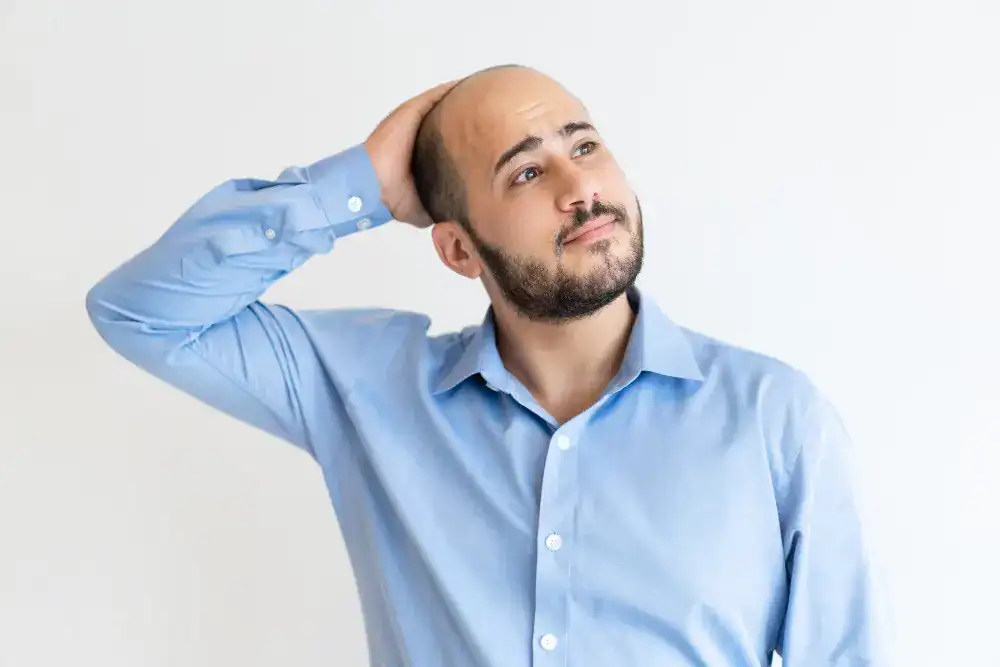
Norwood Stage 5 represents advanced male pattern baldness where the front and crown (vertex) balding areas are no longer distinct. The “bridge” of hair that once separated them has either completely collapsed or become extremely thin and sparse. While a total transformation is still very possible, Stage 5 requires a high-volume hair transplant-typically 4,000 to 5,000+ grafts. At this level, strategic graft placement is vital to ensure a natural look while managing the limited donor supply. What is Norwood Stage 5? Norwood 5 is the stage where the frontal and crown baldness merge. The scalp begins to take on the classic “horseshoe” shape, but some thinning hair still remains in the center of the head. The Visual Markers: The Collapsing Bridge In Stage 4, you had two separate “islands” of baldness. In Stage 5: Why Norwood 5 is a “Race Against Time” At this stage, the demand for hair (recipient area) is nearly at its peak, while the supply (donor area) is starting to shrink. How Many Grafts Are Needed for Norwood 5? To achieve meaningful coverage from the hairline all the way to the back of the crown, most Norwood 5 patients require between 4,000 and 5,500 grafts. The High-Volume Challenge: 4,000 to 5,000+ Grafts Because the area of baldness is massive, a standard 2,000-graft session will not be enough. When One Session Isn’t Enough: The Two-Session Strategy If your donor area is not exceptionally dense, trying to take 5,000 grafts in a single day can be risky for the survival of the grafts and the healing of the donor area. Surgical Strategies for Advanced Loss At Stage 5, the primary strategy is Prioritized Density. Since we cannot usually achieve 100% original density over the entire scalp, we distribute grafts where they provide the most significant visual impact. Maximizing the Donor Area: Efficiency is Everything With a demand for 4,000+ grafts, every single follicle is precious. The Front-to-Back Gradient: Where to Put the Density? We follow a “Frontal Dominance” rule for Norwood 5: Combining FUE and DHI for Maximum Volume For Stage 5, a Hybrid Approach is highly effective: The Role of Body Hair Transplants (BHT) at Stage 5 If your scalp donor area (the back of your head) is too weak to provide 5,000 grafts, we can look for “extra fuel” from other parts of your body. Using Beard or Chest Hair as a Backup Donor Important Note: Body hair is a “backup.” Our primary goal is always to achieve the result using your scalp hair first. Frequently Asked Questions (FAQ) Can I reach Norwood 1 density at Stage 5? To be honest: No. It is biologically impossible to move from Stage 5 back to the 100% density of a teenager (Norwood 1). However, we can move you back to a Norwood 2 or 3 look, which provides a full appearance and a strong hairline. The goal is “socially thick” hair-meaning no one will notice you were ever balding. What if my donor area is too weak? If your scalp donor area is limited, we have two options: How long is the surgery for 5,000 grafts? A 5,000-graft session is a “Mega-Session” and typically takes 8 to 10 hours. At Medifue, these sessions are handled with extreme care, often involving a rotating team of specialists to ensure every graft is handled with the same precision from the first hour to the last. Will I need a second transplant later? It depends on your age and the stability of your native hair. If you are 50+, your hair loss has likely stabilized. If you are 30 and at Stage 5, you may need a small “touch-up” session in the future to maintain density as your original non-transplanted hair continues its natural course. Conclusion: Managing Expectations for a Life-Changing Result A Norwood 5 hair transplant is one of the most transformative procedures in cosmetic surgery. It takes a person from “visibly balding” to “having a full head of hair.” The Medifue Promise for Stage 5: Because the stakes are higher at this stage, we don’t guess-we plan. Through advanced donor hair mapping, we ensure that we harvest just enough to cover your baldness without thinning out the back of your head. While Stage 5 requires more grafts and a more complex surgical strategy, the results are life-changing. You aren’t just getting hair back; you are getting your silhouette and your confidence back.
Norwood 4 Hair Transplant: Restoring Your Hairline and Crown
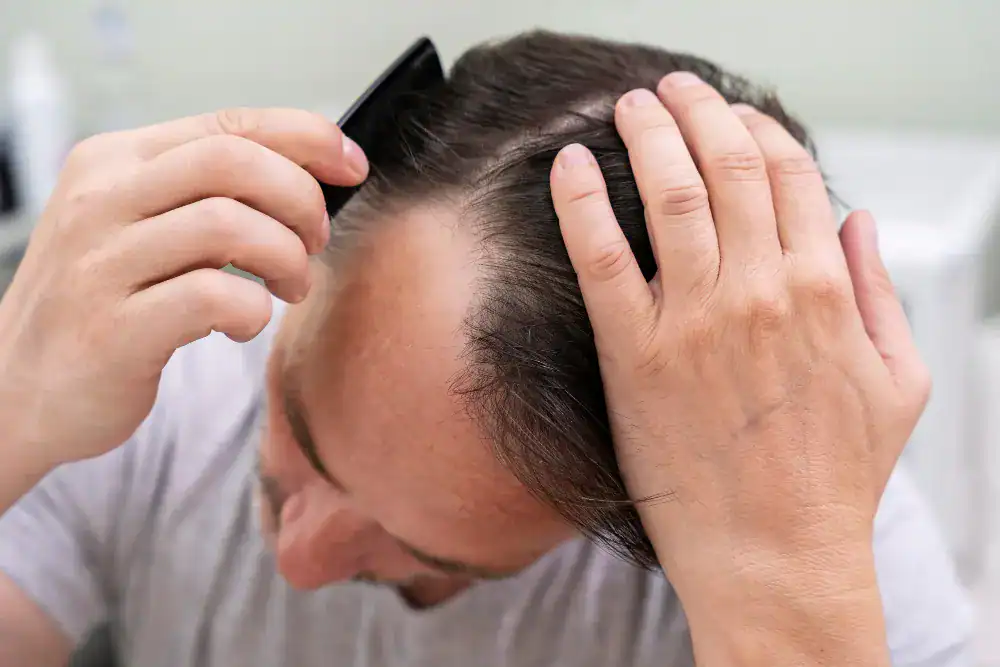
TL;DR: The Quick Summary Norwood Stage 4 is a significant level of male pattern baldness where hair loss occurs in two distinct areas: a deeply receding front hairline and a noticeable bald spot on the crown (vertex). Crucially, these two areas are still separated by a “bridge” of hair across the middle of the scalp. For most men, this is the “tipping point” where surgery becomes the only effective solution. A hair transplant for Norwood 4 typically requires 3,000 to 4,000 grafts to restore a youthful frame to the face and fill the thinning crown. What is Norwood Stage 4? Norwood 4 is characterized by advanced thinning at both the front and the back of the head, but the hair loss has not yet merged into one large bald area. The Visual Landmarks: Receding Front and Balding Vertex At this stage, you will notice three specific changes: The “Bridge”: Why This Hair Band is Critical The defining feature of Stage 4 is the solid band of hair that runs across the top of the head, separating the frontal baldness from the crown baldness. How Many Grafts Are Needed for Norwood 4? To achieve satisfactory density in both the hairline and the crown, most Norwood 4 patients require between 3,000 and 4,000 grafts. Calculating the Area: Frontal vs. Crown Demand A Norwood 4 transplant is essentially two procedures in one: Why a “Mega-Session” Might Be Necessary Since the total graft count often exceeds 3,500, Medifue specialists often recommend a Mega-Session. Using Sapphire FUE or a Hybrid (FUE+DHI) technique, we can transplant a high volume of grafts in a single long session (6-8 hours), allowing the patient to recover from both areas simultaneously. Hair Transplant Strategies for Norwood 4 Direct Answer: The biggest challenge in Stage 4 is managing the available donor hair to cover two large areas (front and crown). The most successful strategy is the “Front-First” approach, ensuring the face is framed perfectly while providing natural coverage for the vertex. FUE vs. DHI: Which One for Combined Front and Crown Work? For a Norwood 4 patient, a Hybrid Technique is often the gold standard: Prioritizing the Hairline: The “Face-Framing” Rule In hair restoration, we follow a simple rule: The front is for others to see, the crown is for you to see. * Because your donor area (the back of your head) has a limited number of follicles, we always prioritize the frontal hairline. Managing the Crown: Why It Needs Extra Care The crown (vertex) is often the trickiest part of a Stage 4 transplant for two reasons: Can You Reverse Norwood 4 Without Surgery? Direct Answer: No. Once you have reached a visible Norwood 4 with smooth bald patches, non-surgical treatments cannot regrow the hair. However, they are still vital for protecting the “Bridge.” The Limits of Minoxidil and Finasteride at This Stage At Stage 4, medications like Finasteride or Minoxidil are used as maintenance, not as a cure. Post-Op Support: Keeping Your “Native Bridge” Strong Even after a successful 4,000-graft transplant, your original, non-transplanted hair in the middle of your head is still susceptible to genetic loss. Here is Part 3, the final section of the guide on Norwood 4. This section focuses on managing expectations-since this stage involves the crown-and providing the necessary reassurance for patients about to undergo a significant transformation. Frequently Asked Questions (FAQ) Direct Answer: Patients at Stage 4 often worry about the “completeness” of their result because the area of loss is larger. Here are the most common questions we answer at Medifue. Can one session cover the entire bald area in Stage 4? Yes, in most cases. Because Norwood 4 still features a “bridge” of hair, the total bald area is divided into two smaller sections. A “Mega-Session” of 3,500 to 4,000 grafts is usually sufficient to provide dense coverage for the hairline and moderate-to-high density for the crown in a single day. Will my crown look as thick as my hairline after surgery? It depends on your donor capacity. As a rule, surgeons prioritize the hairline for visual impact. While we aim for maximum density in the crown, the “crown whorl” (the spiral pattern) naturally reveals more scalp than the forward-laying hair in the front. However, the result will look like a full head of hair to the casual observer. Is Norwood 4 considered “advanced” hair loss? It is considered the transition from “Moderate” to “Advanced.” It is the last stage where a single surgery can typically “fix” the entire problem. Once you progress to Stage 5 or 6, the bridge disappears, and the demand for grafts often exceeds what can be safely taken in one session. How long is the recovery for a 4,000-graft session? The physical healing (scabbing and redness) takes about 10 to 14 days. However, because Norwood 4 involves the crown, you must be extra careful with your sleeping position for the first week to avoid rubbing the transplanted grafts in the back against your pillow. Conclusion: Why Stage 4 is the Best Time to Act If you are at Norwood Stage 4, you are at a crossroads. You still have enough donor hair to achieve a total transformation, and you still have a “bridge” to work with. The Medifue Advantage for Norwood 4: By using 3D Hair Planning, we can precisely calculate how many grafts to allocate to your receding front and how many to save for your balding vertex. This ensures that you don’t just “get hair,” but you get a balanced, age-appropriate, and dense result that looks natural from every angle. Don’t wait for the bridge to collapse. Restoring a Norwood 4 head of hair is one of the most rewarding procedures in modern hair transplantation, offering a complete return to a youthful silhouette.
Norwood 2 Hair Loss: Is It a Mature Hairline or the Start of Balding?
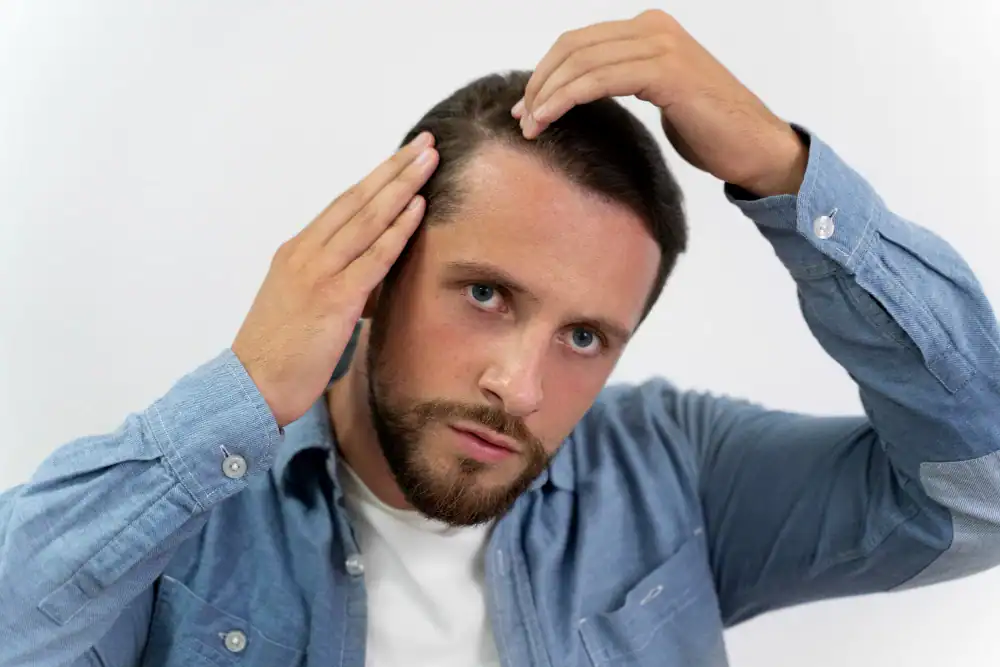
TL;DR: The Quick Summary Norwood Scale Stage 2 is often described as the “Mature Hairline.” It is characterized by a slight recession at the temples (corners of the forehead), typically creating a mild M-shape. For many men, this is a normal part of aging and not necessarily a sign that severe baldness is coming. However, it is the critical “observation phase.” If the hair behind the hairline starts thinning, it may be progressing to Stage 3. Treatment at this stage is usually preventative (to stop further loss) or aesthetic (to lower the line). What Does a Norwood 2 Hairline Look Like? A Norwood 2 hairline has receded about 1.5 to 2.5 centimeters from the original childhood hairline, specifically at the temples. It is no longer a perfectly straight line. Identifying the “M” Shape (Mild Recession) When you pull your hair back, you will notice that the center of your hairline (the widow’s peak area) remains relatively low, but the corners have moved up and back. The Key Difference Between Norwood 1 (Juvenile) and Norwood 2 (Mature) The Big Question: Will It Progress to Stage 3? Not always. Many men reach Norwood 2 in their late 20s and stay there for decades without ever going bald. However, determining if your hairline is “settling” or “marching backward” requires a closer look. Genetic Factors: Look at Your Family History Male Pattern Baldness is hereditary. Look at the men in your family (father, grandfathers, uncles). The “Miniaturization” Test: Is the Hair Thinning Behind the Line? This is the clinical sign doctors look for. Here is Part 2 of the guide on Norwood 2. In this section, we tackle the dilemma many men face: “Should I wait, or should I get a hair transplant now?” and the specific numbers involved. Can You Get a Hair Transplant at Norwood 2? Yes, you can, but it is usually considered an aesthetic choice rather than a medical necessity. A hair transplant at this stage is primarily used to lower a naturally high forehead or to fill in the recessed “corners” for a more youthful look. The Debate: Is It Too Early for Surgery? Most surgeons advise caution at Stage 2. Who is a Good Candidate? (Aesthetic Hairline Lowering) You are an ideal candidate for a Norwood 2 transplant if: How Many Grafts Do You Need for Norwood 2? Estimated Range: 1,000 to 1,500 Grafts. Because the area to be covered is small (just the two temple corners), you don’t need a high volume of grafts. How to Stop Norwood 2 from Becoming Norwood 3 Prevention is much easier (and cheaper) than restoration. If you catch your hair loss at Norwood 2, you have a high chance of keeping your hair for the rest of your life using non-surgical methods. Medication: Finasteride and Minoxidil Strategy This is the “Gold Standard” for Stage 2: Non-Surgical Boosters: PRP and Mesotherapy If you want to avoid daily pills, clinical treatments are excellent options: Lifestyle Changes to Support Hair Health While genetics play the biggest role, your lifestyle can accelerate or slow down the process: Here is Part 3, the final section of the guide on Norwood 2. This section answers the specific, often anxious questions users have at this stage and provides a clear concluding “call to action.” Frequently Asked Questions (FAQ) At Norwood Stage 2, most questions revolve around whether the situation is permanent or just a phase. Here are the facts. Is Norwood 2 considered balding? Technically, yes, it is the first measurable stage of male pattern baldness on the scale. However, socially and clinically, it is often viewed as a “Mature Hairline.” Whether it is “balding” depends on your future progression. If it stays at Stage 2 forever, most people will simply see it as a normal adult hairline. Can Minoxidil regrow a Norwood 2 hairline? Minoxidil is very effective at thickening the hair you still have. If your temples have just started to thin, Minoxidil can revive those follicles. However, if the area is completely smooth and bald (the follicles have died), Minoxidil cannot “resurrect” them; in that case, only a hair transplant can restore the hair. Does a mature hairline always lead to Stage 3? No. This is the biggest misconception. Many men develop a Norwood 2 hairline between ages 17 and 25 and then see no further loss for the next 30 years. It is only considered a “progressive” condition if you notice thinning behind the temples or at the crown. How can I tell if my hairline is still moving? The best way is to take high-quality photos every 6 months in the same lighting. Compare the distance from your eyebrows to your hairline. If the distance is increasing, your Norwood 2 is progressing. Conclusion: Monitor, Protect, but Don’t Panic Reaching Norwood Stage 2 is not a cause for alarm; it is a signal to pay attention. For the majority of men, this is simply the face maturing. Your Checklist for Norwood 2: Whether you choose to embrace your mature look or decide on a precision Sapphire FUE transplant to restore your teenage line, the power is in your hands-as long as you act while your donor area is still strong. Transform your hair today Start your free consultation Experience Medifue’s advanced 3D hair transplant technology. Discover personalized treatment plans and expert guidance tailored to your needs and your hair restoration goals. Book a consultation
The Norwood Scale Explained: Which Stage of Hair Loss Are You?

TL;DR: The Quick Summary The Hamilton-Norwood Scale is the global standard used by doctors to classify the severity of Male Pattern Baldness (Androgenetic Alopecia). It divides hair loss into 7 distinct stages. Stage 1 represents a full head of hair, while Stage 7 represents severe baldness with only a “horseshoe” pattern remaining. Understanding your stage is critical because it determines the number of grafts you need for a transplant and which medical treatments (like Finasteride or Minoxidil) will be most effective for you. What is the Hamilton-Norwood Scale? The Norwood Scale is a visual classification system used to measure the extent of male hair loss. It helps patients and surgeons speak the same language when planning a hair restoration strategy. Why Doctors Use It (The Standard for Male Pattern Baldness) Before this scale was revised by Dr. O’Tar Norwood in the 1970s, describing hair loss was vague. Today, it serves two main purposes: How to Diagnose Yourself at Home Stand in front of a mirror with good lighting. You need to check two specific areas: The 7 Stages of Hair Loss (Detailed Breakdown) Here is exactly what each stage looks like. Most men progress through these stages sequentially, though the speed varies greatly. Stage 1: No Significant Loss (The Full Head of Hair) This is the “control” stage. Stage 2: The “Mature” Hairline (Mild Recession at Temples) This is often where panic begins, but it is technically considered normal aging, not balding. Stage 3: The Turning Point (First Signs of Balding) According to the scale, this is the official beginning of Male Pattern Baldness. Subsection: Stage 3-Vertex (Balding at the Crown) A common variation of Stage 3. Here is Part 2 of the comprehensive guide on the Norwood Scale. In this section, we move into the advanced stages of hair loss where the visual changes become much more pronounced and surgical planning becomes critical. Stage 4: Significant Recession and Crown Thinning At this stage, hair loss is obvious and harder to conceal. Stage 5: The Bridge Begins to Fade Stage 5 is a more severe version of Stage 4. Stage 6: The Bridge is Gone (Front and Crown Merge) This is a major transition point in male pattern baldness. Stage 7: Severe Hair Loss (The Horseshoe Pattern) This is the most advanced stage of the Norwood Scale. How Many Grafts Do You Need? (Graft Calculator by Stage) The number of grafts depends on your head size and desired density, but here are the general averages used by surgeons to plan operations. Grafts Needed for Norwood 2-3 (Hairline Restoration) Grafts Needed for Norwood 4-5 (Coverage and Density) Can Norwood 6-7 Be Fixed? (Donor Area Limitations) Here is Part 3, the final section of the comprehensive guide on the Norwood Scale. This section focuses on solutions (treatments per stage) and answers the most critical user questions before wrapping up. Matching Treatments to Your Stage Not every treatment works for every stage. Using a shampoo for Stage 6 baldness is a waste of money, just as rushing into surgery for Stage 1 is unnecessary. Here is the correct roadmap: Early Stages (1-2): Prevention is Key At this stage, surgery is rarely recommended unless you have an uneven hairline you want to fix aesthetically. Mid Stages (3-5): The “Goldilocks Zone” for Transplants This is the most common time men seek help. There is enough hair loss to justify surgery, but enough donor hair to get a great result. Late Stages (6-7): Strategic Restoration The bald area is large, and the donor area is limited. Is It a Mature Hairline or Balding? (The Common Confusion) Many young men panic when their hairline changes in their 20s. However, transitioning from a “juvenile” (rounded) hairline to a “mature” (slightly higher) hairline is normal biology, not necessarily baldness. How to tell the difference: Frequently Asked Questions (FAQ) At what Norwood stage should I get a hair transplant? Most surgeons agree that Norwood Stage 3 is the ideal starting point. This is when the hair loss creates a visible cosmetic issue (deep temples or vertex thinning). Waiting until Stage 6 or 7 makes it harder to achieve full coverage. Can you go from Norwood 4 back to Norwood 1? With a successful hair transplant, yes, visually. A skilled surgeon can recreate the hairline of a Norwood 1 or 2 patient. However, biologically, you are still a Norwood 4 patient, meaning you must protect your non-transplanted hair with medication to stop the pattern from progressing behind the new implants. How fast does one progress through the Norwood scale? It is unpredictable and depends on your genetics. Some men stay at Stage 3 for 20 years; others rush from Stage 2 to Stage 6 in just 5 years. Conclusion: Don’t Wait Until Stage 7 to Act The Norwood Scale is more than just a chart; it is a clock. The further you progress down the scale, the more grafts you need and the less donor hair you have available to use. If you identify yourself as Stage 3 or higher, it is time to consult with a specialist. You don’t have to accept hair loss as your fate. With modern FUE and DHI techniques available at clinics like Medifue, you can turn back the clock but the best results always come to those who act before the “Horseshoe” pattern sets in. Transform your hair today Start your free consultation Experience Medifue’s advanced 3D hair transplant technology. Discover personalized treatment plans and expert guidance tailored to your needs and your hair restoration goals. Book a consultation
Shock Loss After Hair Transplant: The Ultimate Recovery Guide
Shock loss (or the “shedding phase”) is a temporary and completely normal biological response experienced by approximately 95% of hair transplant patients. It typically begins 2 to 4 weeks after surgery and involves the shedding of hair shafts due to the natural trauma of the procedure. Do not panic: losing these hairs does not mean the transplant failed. The living follicles (roots) remain safely anchored under your skin. This phase usually ends by the 3rd or 4th month, after which permanent, healthy hair growth begins. It is simply a “reset” button for your hair cycle before the final results appear. What is Shock Loss (Shedding Phase)? Shock loss is the temporary shedding of hair shafts (the visible part of the hair) following a traumatic event to the scalp, such as a hair transplant. It occurs because the hair follicles enter a resting phase to protect themselves and recover. The Science Behind It: Telogen Effluvium Explained To understand shock loss, you must understand the hair growth cycle. Normally, your hair goes through three stages: During a hair transplant (whether FUE or DHI), the extraction and implantation processes cause “micro-trauma” to the scalp. This sudden stress pushes the hair follicles out of the growing phase (Anagen) and forces them prematurely into the resting phase (Telogen). This condition is medically known as Telogen Effluvium. Is Shock Loss Normal or a Sign of Failure? It is 100% normal. In fact, approximately 90% to 95% of all hair transplant patients experience some degree of shock loss. It is not a sign of failure. On the contrary, it indicates that the body is reacting naturally to the procedure and the healing process has begun. The body sheds the old hair shaft to make room for a new, healthier hair strand that will grow from the same root. The Difference Between Shedding Hair Shafts and Losing Roots This is the most critical distinction every patient must understand: Think of it like a tree in winter. The tree loses its leaves (the hair shafts) due to the change in season (the surgery trauma), but the roots remain alive underground. Come spring (the regrowth phase), new leaves will appear. Important Note: You might see a small white bulb at the end of the fallen hair. Do not worry; this is usually just dry skin or the anchor of the hair shaft, not the living graft itself. When Does Shock Loss Start and End? (Timeline) Shock loss typically begins between Week 2 and Week 4 after the surgery. It peaks around Month 2 and usually resolves by Month 3 or 4, after which permanent growth begins. The First 2 Weeks: The “Honeymoon” Phase Immediately after your transplant, your hair will look great. The implanted grafts are in place, and you can see your new hairline. We call this the “honeymoon phase.” During this time, the grafts are anchoring themselves into the recipient area. Weeks 3 to 8: The Peak of Shedding Around the third week, the shedding begins. It can be gradual or sudden. You may notice hairs falling out while washing or touching your head. When Will My Hair Start Growing Back? Once the shock loss phase ends (usually around the 3rd or 4th month), the follicles wake up from their rest. You will start to see thin, baby hairs emerging. Types of Shock Loss: Where Does It Happen? Shock loss is not limited to the newly transplanted hair. It can occur in three distinct areas: the recipient area (transplanted hair), the surrounding existing hair (native hair), and rarely, the donor area (back of the head). Shock Loss of Transplanted Hair (Recipient Area) This is the most common form of shedding. As discussed in Part 1, the hair follicles that were moved from the back of your head to the top fall out due to the interruption in their blood supply during the transfer. Shock Loss of Native Hair (Existing Hair) Patients often panic when they see their non-transplanted, existing hair thinning out around the implant area. This happens because the “neighborhood” has been disturbed. When new grafts are planted between existing hairs, the surrounding native follicles may also go into shock due to the inflammation and changes in local blood flow. Shock Loss in the Donor Area (Back of Head) This is less common but possible. It appears as temporary thinning or patchy areas in the back of the head where the grafts were taken. Why Does Shock Loss Happen? The Main Causes Shock loss is primarily caused by trauma to the scalp and a temporary disruption of blood flow (vascularity). The body prioritizes healing the skin over growing hair, forcing follicles into a resting state. Trauma to the Scalp and Reduced Blood Flow Every incision or channel opened during a hair transplant (whether via Sapphire blade or DHI pen) creates a tiny wound. When thousands of these micro-wounds occur at once, the scalp experiences inflammation. To heal these wounds, the body redirects energy and blood flow to skin repair. The hair follicles, receiving fewer nutrients and oxygen for a short period, essentially “shut down” to survive the trauma. The Impact of Anesthesia and Adrenaline During the operation, a fluid mixture containing local anesthesia and adrenaline (tumescent fluid) is injected into the scalp. High Density Packing (Dense Packing) We all want high density, but there is a limit. If a surgeon packs grafts too closely together (“dense packing”), the blood supply in that specific square centimeter may not be enough to support all the roots immediately. Here is Part 3 of the comprehensive guide on Shock Loss. In this section, we move from the “Why” to the “How.” This is what users search for when they want to take control of the situation and speed up their recovery. Can You Prevent or Minimize Shock Loss? You cannot completely prevent shock loss, as it is a natural biological response to surgery. However, you can minimize its severity and speed up regrowth by improving blood circulation and providing the
What Really Helps Against Hair Loss? Proven Treatments, Causes & Best Options

TL;DR: Hair loss has many causes from genetics to stress and affects both men and women. Proven treatments such as minoxidil and finasteride can slow hair loss, while modern therapies like PRP and laser treatments support hair regrowth. In advanced cases, a FUE hair transplant offers a long-term solution. The German hair transplant clinic MediFUE combines medical expertise with personalized consultations and high-quality procedures ideal for anyone seeking a sustainable solution to hair loss. Why hair loss occurs: the main causes Hair loss usually develops due to a combination of genetic predisposition and hormonal influences, particularly the hormone DHT, which causes hair follicles to shrink. Other causes include nutrient deficiencies, chronic stress, thyroid disorders, as well as external factors such as excessive styling or aggressive hair-care products. An accurate diagnosis is essential to choose the right treatment. Genetics & hormonal influences (DHT) The most common cause of permanent hair loss is hereditary hair loss (androgenetic alopecia). In this condition, hair follicles are sensitive to the hormone DHT (dihydrotestosterone), leading to progressive miniaturization especially at the temples, crown, and back of the head. Lifestyle, nutrition & stress Chronic stress, vitamin deficiencies (e.g., iron, zinc, biotin), smoking, and an unhealthy diet can also cause diffuse hair loss. Lack of sleep and hormonal changes (for example after pregnancy) play a role as well. Environment, styling & mechanical stress Excessive styling, tight hairstyles, aggressive care products, or frequent straightening/dyeing put strain on the scalp. Over time, this can lead to hair damage and increased hair loss. Proven medical treatments for hair loss The two most thoroughly studied medications for hair loss are minoxidil (topical) and finasteride (oral). Minoxidil improves blood flow and prolongs the hair growth phase. Finasteride lowers DHT levels in the body and thereby slows the progression of genetic hair loss however, it is approved for men only. Both treatments require continuous use and work best in early stages. Minoxidil (topical) An over-the-counter treatment applied directly to the scalp. It extends the hair growth phase, improves scalp circulation, and can counteract hair loss. Effective for both men and women. Finasteride (oral, prescription) Targets the hormone DHT the main driver of genetic hair loss. Finasteride can stop progression or even stimulate new growth, but it is for men only and must be taken under medical supervision. Modern non-surgical methods for hair regeneration Non-surgical therapies such as PRP (platelet-rich plasma), low-level laser therapy (LLLT), or microneedling offer effective alternatives to surgery especially for early to moderate hair loss. They stimulate follicle regeneration, improve scalp circulation, and can reactivate hair growth. These methods are often gentle, low-risk, and work well in combination with medication. PRP therapy (platelet-rich plasma) PRP involves processing the patient’s own blood and injecting concentrated plasma into the scalp. The growth factors stimulate follicle regeneration and thickening. Particularly effective for diffuse or hormonally related hair loss. Low-level laser therapy (LLLT) Infrared light stimulates cellular activity and scalp circulation. This method is painless, safe, and can be used at home or in the clinic ideal as a supportive treatment alongside others. Microneedling and scalp care Microneedling creates tiny microchannels in the skin, allowing active ingredients to penetrate more effectively. Combined with serums or PRP, it can further stimulate hair growth. Hair transplantation in Germany: when and for whom it makes sense When medication or therapies are no longer sufficient, a hair transplant offers a permanent solution. It is often the best option for advanced hair loss (Norwood 3–6). Suitable for: Not suitable when: The most common method today is the FUE technique (follicular unit extraction), where individual follicles are harvested and transplanted. This approach is minimally invasive, scar-free, and delivers natural-looking results. Why MediFUE can be a good choice MediFUE is a specialized hair clinic based in Germany, focusing on modern hair transplant techniques and individualized patient care. Services at a glance: By combining medical expertise, modern technologies, and German quality standards, MediFUE is regarded as a reliable partner for anyone seeking long-term solutions to hair loss. Pros and cons of different treatment options Treatment Pros Cons Minoxidil / Finasteride Easy to use, effective when started early Daily use required, possible side effects PRP therapy Natural, stimulates regeneration Multiple sessions needed, not effective for everyone LLLT / Microneedling Non-invasive, suitable for home use Long-term application required Hair transplantation Permanent, visible results Higher cost, suitable only for stable hair loss How to choose the right treatment: a decision checklist Before choosing a method, clarify the following questions: A consultation for example at MediFUE can help define the most suitable therapy on an individual basis. Tips for prevention and maintaining scalp health Even though genetic hair loss cannot always be fully prevented, there are effective measures to slow progression and maintain hair health: FAQs – common questions about hair loss What really helps against hair loss? Scientifically proven options include minoxidil, finasteride, PRP, and hair transplantation depending on the stage of hair loss. When should I consider a hair transplant? When hair loss is advanced and stable (e.g., Norwood 3 or higher) and medications are no longer sufficient. How quickly do treatments like minoxidil or finasteride work? Initial results usually appear after 3–6 months with consistent use. Can stress-related hair loss be permanent? In many cases, stress-related hair loss is reversible provided the trigger is addressed. Is hair loss in women treatable? Yes, for example with PRP, minoxidil, and medical evaluation of hormonal causes. Why choose MediFUE instead of a clinic abroad? MediFUE offers German quality standards, local care, and transparency without travel stress or language barriers. Transform your hair today Start your free consultation Experience Medifue’s advanced 3D hair transplant technology. Discover personalized treatment plans and expert guidance tailored to your needs and your hair restoration goals. Book a consultation
Best Vitamins for Hair Loss: What to Take (and When It Actually Helps)

TL;DR: Hair loss can be worsened or in some cases triggered by vitamin deficiencies, especially a lack of biotin, vitamin D, iron, zinc, or vitamin B12. These nutrients are essential for hair growth, structure, and regeneration. Anyone experiencing hair loss should first undergo a blood test to identify the root cause. Targeted intake through diet or supplements is only effective when an actual deficiency exists. An individual analysis, such as the one offered by MediFUE in Germany, provides the necessary clarity. Why vitamins are important for hair growth Vitamins are essential for hair growth because they supply hair follicles with nutrients and keep the hair cycle active. B vitamins, vitamin D, and iron in particular support cell division in the hair root and protect against growth disorders. When these building blocks are missing, the cycle becomes imbalanced hair becomes thinner or starts to fall out. Which vitamin deficiencies can cause hair loss? A deficiency in biotin, vitamin D, iron, or zinc is a common cause of diffuse or stress-related hair loss. These vitamins and trace elements regulate hair cell regeneration. Without them, growth slows down, hair structure weakens, and visible hair loss can occur especially in women after dieting, stress, or hormonal changes. The most important vitamins for hair loss at a glance The most effective vitamins against hair loss include biotin, vitamin D, B12, C, E, as well as iron and zinc. They strengthen hair roots, promote circulation, and protect against cellular damage: How can I tell if I have a vitamin deficiency causing hair loss? A vitamin deficiency can manifest as hair loss, brittle hair, dry scalp, and often physical symptoms such as fatigue or concentration problems. A clear diagnosis is only possible through a blood test, ideally under medical supervision or in specialized clinics like MediFUE. Symptoms alone are not sufficient for targeted supplementation. Natural vs. synthetic vitamins which work better? Natural vitamins from food are generally more effective and better tolerated than synthetic supplements. They are absorbed more efficiently because they come with supporting compounds such as enzymes and fiber. Supplements can still be useful in cases of: Foods rich in hair-friendly vitamins Certain foods provide all the vitamins hair needs to grow. 🟢 Top foods for healthy hair: Food Nutrients Eggs Biotin, Vitamin D, B12 Salmon Vitamin D, Omega-3, B vitamins Spinach Iron, folate, Vitamin C Nuts (e.g., almonds) Zinc, Vitamin E, biotin Oats Iron, zinc, B vitamins Broccoli Vitamin C, E, K A balanced, varied diet is more effective in the long term than supplementation alone. When supplementation makes sense – and when it doesn’t Supplements are only recommended when a deficiency has been diagnosed or when there is a specific increased need. 🟢 Recommended when: 🔴 Not recommended when: Tip: Always consult a doctor or a clinic like MediFUE before supplementing. Vitamins & hair loss: what does science say? Studies confirm that vitamin deficiencies can worsen hair loss, and targeted correction may help. Scientifically supported links: 🚫 However: In genetically determined (androgenetic) hair loss, vitamins alone are often not sufficient medical or surgical solutions are usually required. MediFUE tip: check blood values before any treatment No blood test, no targeted therapy this is the first step at MediFUE. ✅ Benefits of blood testing: At MediFUE, a comprehensive analysis is offered before every hair treatment to identify the true cause of hair loss. Frequently asked questions about vitamins and hair loss Which blood values should be checked for hair loss? Especially vitamin D, ferritin (iron), zinc, biotin, and B12 are relevant. A general practitioner or a hair clinic like MediFUE can determine the appropriate tests. How long does it take for vitamins to work against hair loss? In most cases, first effects are visible after 2–3 months, provided a real deficiency exists. Can too much vitamin A cause hair loss? Yes. Overdosing vitamin A can be toxic and negatively affect the hair cycle, especially with long-term use without medical supervision. Are drugstore hair vitamin capsules effective? Only to a limited extent. They often contain low dosages or unnecessary additives. Targeted, medically tailored supplements are usually more effective. What role does nutrition play in hair loss? An unbalanced diet can worsen hair loss, especially with deficiencies in iron, protein, or vitamins. A nutrient-rich, whole-food diet is therefore essential. Are there specific vitamins for women against hair loss? Not specifically, but female-focused formulas often contain higher levels of iron, folic acid, and B vitamins, which can be helpful in hormonally related hair loss (e.g., after childbirth). Can hair loss be stopped with vitamins alone? Not always. In cases of genetic hair loss, vitamins alone are usually insufficient additional medical or surgical treatments are often necessary. Transform your hair today Start your free consultation Experience Medifue’s advanced 3D hair transplant technology. Discover personalized treatment plans and expert guidance tailored to your needs and your hair restoration goals. Book a consultation
How Often Should You Wash Your Hair If You Have Hair Loss?
TL;DR: When it comes to hair loss, it’s not about how often you wash your hair, but how you wash it. Washing frequently or infrequently doesn’t cause true hair loss, but it can make it look worse if the scalp becomes irritated, too oily, or too dry. Most people do well with a rhythm of every 2–3 days, depending on skin type. Gentle shampoo, lukewarm water, soft massaging, and careful drying protect the roots and reduce breakage. The right routine supports scalp health, while Medifue helps analyze the real causes of hair loss and treat them in a targeted way. How is hair washing related to hair loss? Frequent or incorrect hair washing usually does not cause true hair loss, but it can worsen existing issues or throw the scalp out of balance. Many people assume washing is the cause because they see more hair in the shower. In reality, those hairs would have shed anyway washing simply helps them release sooner. What matters is not whether you wash, but how you wash. Harsh products, hot water, heavy rubbing, or washing too rarely can lead to irritation, sebum buildup, dryness, or breakage. All of these can make hair loss look worse, even if the hair roots themselves aren’t damaged. How often should you really wash your hair when you have hair loss? If you’re experiencing hair loss, you should wash as often as your scalp needs usually every 2 to 3 days using mild products and a gentle routine. There is no single rule that fits everyone. The best washing frequency depends on your skin type, styling habits, and lifestyle. Washing too often can dry out or irritate the scalp, while washing too rarely can lead to sebum buildup, inflammation, or itchiness factors that can make hair loss look worse. Recommended guidelines for hair loss: Oily scalp: every 1–2 days – Helps remove excess oil and keep pores clear. Normal scalp: every 2–3 days – Enough to keep the scalp clean without stressing it. Dry or sensitive scalp: every 3–4 days – Avoids additional irritation and dryness. Which washing mistakes can make hair loss look worse? Washing itself doesn’t cause hair loss common washing mistakes can irritate the scalp, dry out the hair, or lead to breakage. Many people react with rushed changes like “wash less” or “clean more aggressively,” but these can make the problem look worse. When the scalp loses balance, it can respond with irritation, inflammation, or excessive oil production making hair loss appear more intense. Common washing mistakes: 1. Water that’s too hot Hot water dries out the scalp, increases irritation, and makes hair more brittle. Lukewarm water is gentler and protects the skin barrier. 2. Washing too aggressively or daily without a mild shampoo Harsh shampoos or overly frequent washing strip the scalp of lipids, which can lead to irritation or rebound oiliness both can make hair loss look worse. 3. Washing too rarely If the scalp isn’t cleaned regularly, sebum, dirt, and styling residue build up. This can clog pores, promote inflammation, and disrupt the growth cycle. 4. Rubbing or scrubbing too hard while washing Mechanical stress causes breakage. People with hair loss should be extra gentle with wet hair, because it’s most fragile then. 5. Using the wrong shampoo for your scalp type Shampoos with sulfates, drying alcohols, or strong fragrance can stress the scalp. People dealing with hair loss typically benefit from mild, scalp-friendly formulas. The right hair-washing routine for hair loss The right routine can reduce the visible appearance of hair loss, calm the scalp, and strengthen hair even though it can’t stop genetic hair loss. With hair loss, it’s not about washing less, but washing correctly. A gentle, scalp-friendly routine supports the skin’s natural balance and minimizes breakage that can make hair loss look worse. 1. Gently detangle before washing This reduces pulling and breakage in the shower. Use a wide brush or a wide-tooth comb never yank aggressively. 2. Use a mild shampoo and massage gently Apply to the scalp only, not the lengths. Use gentle, circular motions no rubbing or scratching. 3. Add scalp care Especially helpful when dealing with hair loss: caffeine tonics soothing serums light exfoliation (max. 1× per week) These products can support circulation and reduce inflammation. 4. Dry your hair correctly Wet hair is extremely delicate. Don’t rub Use a microfiber towel or a cotton T-shirt Air-dry if possible, or use a blow-dryer on a lukewarm setting 5. Stay consistent A consistent routine matters more than a “perfect” routine. If you have hair loss, don’t over-treat or under-treat the scalp. Which shampoos make sense for hair loss? For hair loss, mild, scalp-friendly shampoos with stimulating or soothing ingredients can be usefulthey won’t stop genetic hair loss, but they may help slow down visible shedding and stabilize the scalp. The goal of a good shampoo isn’t to “make more hair grow,” but to improve conditions at the hairline, reduce inflammation, and bring the scalp back into balance. A calm, clean, well-circulated scalp supports better long-term hair quality. Ingredients that may help with hair loss: Caffeine: supports circulation and may stimulate hair growth. Niacinamide: soothes and strengthens the skin barrier. Biotin: supports hair structure. Zinc: anti-inflammatory and helpful for oily scalps. Panthenol: hydrates and reduces irritation. Amino acids & proteins: strengthen the hair fiber and help prevent breakage. Ingredients to avoid: Sulfates (SLS/SLES): can dry out and irritate the scalp. Strong fragrances: often unnecessary and irritating for sensitive scalps. Drying alcohols: can weaken hair and scalp. What a shampoo can’t do: It can not stop hereditary hair loss. It can not bring back hair that has already fallen out. It works only on the scalp surface, not deep in the follicle. But a good shampoo can: reduce irritation regulate sebum calm inflammation minimize breakage improve the environment for better hair quality How do scalp health and sebum affect hair loss? A healthy scalp is the foundation for strong hair excess sebum, inflammation, or dryness can
How much hair loss is normal?
TL;DR: Most people lose 50–100 hairs per day, and that is completely normal. Only when the hair loss lasts for weeks, becomes significantly stronger or leads to visible thinning, a wider parting or a receding hairline, is it considered noticeable hair loss. Temporary factors such as stress, illness, hormonal changes or nutrient deficiencies can temporarily lead to increased hair loss and are often reversible. Real hair loss, on the other hand, shows changes in patterns and finer, weaker regrowing hairs. With simple self-tests you can clearly recognize the difference. If the hair loss lasts longer or gets worse, Medifue helps by means of precise analysis, individual treatment plans and modern treatments to find the cause and specifically support hair growth. What actually counts as normal hair loss? Normal hair loss means that a certain number of hairs fall out every day without the overall hair fullness visibly decreasing – a completely natural process in the hair cycle. Every hair has a limited lifespan and automatically falls out at the end of its growth phase. This is not a sign of disease, but a necessary step so that new hairs can grow back. As long as the number of hairs that fall out remains within the normal range and the scalp continues to produce new hairs, this is referred to as physiological, i.e. normal hair loss. Normal hair loss: does not lead to visible thinning affects the hair evenly across the entire head is part of the natural regeneration process occurs every day without you always noticing it Only when the amount increases significantly or problems with density appear do we speak of noticeable hair loss. How many hairs do you lose per day? On average, a person loses about 50 to 100 hairs per day – and this is considered completely normal. However, this amount can vary slightly depending on the season, lifestyle, hormonal situation and hair length. Longer hairs often look more dramatic when they fall out because they are more noticeable visually, even though the number is no higher than for people with shorter hair. Typical reference values: 50–100 hairs per day: normal 100–150 hairs per day: still within range, e.g. with long hair or seasonal changes 150+ hairs daily over several weeks: potentially noticeable hair loss Sudden heavy hair loss in clumps: indication of telogen effluvium or a medical cause Important: It is not the number of hairs that fall out that is decisive, but whether visibly less volume or new gaps appear. Why do we lose hair at all? We lose hair because every hair follicle goes through a natural growth cycle – and shedding is a planned, biological part of this cycle. Hair does not grow permanently. Each individual hair goes through phases of growth, transition and rest. Once a hair reaches the end of its life, it is shed by the follicle so that a new hair can grow. This process takes place in every person, every day. The three phases of the hair cycle 1. Anagen phase (growth phase) lasts 2–6 years 85–90 percent of all hairs are in this phase at the same time the longer it lasts, the longer a hair can grow 2. Catagen phase (transition phase) lasts about 2–3 weeks the hair gradually detaches from the follicle 3. Telogen phase (resting phase) lasts 2–4 months at the end, the hair falls out a new hair is already beginning to grow underneath However, if many hairs at the same time enter the telogen phase – for example due to stress, illness or hormonal changes – the hair loss suddenly appears much stronger, even though the biological mechanism is the same. When is hair loss no longer normal? Hair loss is no longer normal when the daily loss is clearly above average, lasts longer than several weeks or leads to visible thinning. While normal shedding does not cause any changes in the hair’s appearance, noticeable hair loss shows clear signs: the hair looks thinner, the parting becomes wider, the hairline recedes or certain areas visibly lose density. These changes indicate that the follicles themselves are affected – not just the hairs that fall out. Warning signs of abnormal hair loss: 1. Visible thinning of the hair If the volume noticeably decreases or the scalp shows through more, this is no longer normal shedding. 2. A widening parting A gradually widening middle parting is a classic sign of early androgenetic hair loss – especially in women. 3. Receding hairline In men, this usually affects the temples; in women, the fine frontal hairline. 4. Round or patchy bald spots This may indicate alopecia areata or inflammatory scalp diseases. 5. Hair loss lasting more than 8–12 weeks Normal, reactive shedding (e.g. after stress or illness) should subside. If not, there is usually more behind it. 6. Loss of very fine, miniaturized hairs Thinner, weaker hairs indicate a change in the follicle, not normal shedding. 7. Negative changes without a clear trigger If there was no obvious trigger such as stress, fever or dieting, medical causes are more likely. The earlier noticeable hair loss is recognized, the better the chances of treatment. Which factors can temporarily trigger more hair loss? Temporary increased hair loss occurs when an external or internal trigger pushes many hairs simultaneously into the resting (telogen) phase – a condition known as telogen effluvium. The hair roots are not permanently damaged, which is why the hair loss usually normalizes again within weeks or months. The crucial thing is to identify and eliminate the trigger. Common short-term triggers for increased hair loss: 1. Stress and emotional strain Severe psychological stress can push hair follicles prematurely into the resting phase. The hair loss typically appears 6–12 weeks later. 2. Hormonal changes Particularly common: after pregnancy (postpartum hair loss) with menstrual or cycle changes during menopause 3. Illnesses and infections Febrile illnesses, flu, Covid-19 and other infections are among the most frequent medical triggers of diffuse hair loss. 4. Changes in diet or deficiencies
Female Hair Loss: Causes, Types and Effective Treatments
TL;DR: Hair loss in women is usually caused by hormonal, nutritional or genetic factors. In many cases, a combination of minoxidil, PRP therapy, nutrient balancing and stress reduction can help. It is crucial to first clarify the underlying cause via blood and hormone tests, for example in specialised clinics such as MediFUE. Early treatment increases the chances of effectively stopping hair loss and stimulating new hair growth. What Are the Most Common Causes of Hair Loss in Women? In women, hair loss is most often triggered by hormonal changes, iron deficiency, stress or genetic factors. The most common causes include: A visit to a doctor and a targeted blood test are essential to correctly identify the cause. How Does Female Hair Loss Differ from Male Hair Loss? In women, hair loss is usually diffuse, while men typically experience receding hairlines and thinning at the crown. Women tend to lose hair evenly over the entire top of the head without developing complete bald patches. In men, hair loss often progresses faster and in clearly defined patterns (Norwood scale), whereas in women it is usually more gradual. Typical patterns in women: These differences are important when choosing the right treatment approach for example, whether to treat with medication, PRP or, in selected cases, surgery. Which Types of Hair Loss Occur in Women? The most common forms in women are diffuse hair loss, hormone-related hair loss and patchy (alopecia areata) hair loss. Common Types at a Glance: Which Treatments Really Help Women with Hair Loss? Effective options for women with hair loss include minoxidil, PRP therapy, nutritional therapy and, in selected cases, hair transplantation. Proven Treatment Options: 🎯 Important: Treatment should always be based on the underlying cause there is no “one-size-fits-all” solution! What Can You Do Yourself to Stop Hair Loss? In the early stages, women can often achieve a lot through targeted hair care, nutrition and stress reduction. ✅ Self-help measures: These measures do not replace medical treatment, but they can support and enhance it. When Should You See a Doctor About Hair Loss? If hair loss persists for several weeks, visibly increases or is accompanied by other physical symptoms, you should seek medical advice. 📌 Typical warning signs: Early diagnosis significantly improves the chances of successfully treating hair loss. What MediFUE Recommends for Women with Hair Loss MediFUE recommends an individual root-cause analysis for women, including hormone and blood tests, before starting any treatment. What MediFUE Specifically Offers: Advantage: Everything takes place in Germany, without language barriers, with local contacts and standardised follow-up care. Frequently Asked Questions About Hair Loss in Women What Is the Most Common Cause of Hair Loss in Women? Hormonal changes for example due to pregnancy, the pill or menopause are among the most common triggers. Does Minoxidil Really Work for Women? Yes. Minoxidil is the best-studied medication for female hair loss and, with regular use, results can usually be seen after around 3 to 6 months. How Long Does It Take for Hair Loss Treatment to Work? Most treatments take at least 3 months before first results are visible. Full effects often appear after 6 to 12 months. Which Blood Values Should Be Checked in Hair Loss? Recommended tests include: iron (ferritin), zinc, vitamin D, thyroid values (TSH), vitamin B12 and, if needed, hormone levels. Can Hair Loss in Menopause Be Treated? Yes. Hormone therapy, PRP and/or minoxidil can often slow down or partially reverse hair loss during menopause. Is a Hair Transplant for Women Possible? Yes, especially in cases of stable, localised thinning (for example at the parting). A detailed diagnosis and an experienced specialist are essential beforehand. How Much Does PRP Treatment Cost at MediFUE? The cost depends on the scope of treatment but is moderate compared to many other countries and includes consultation and follow-up. MediFUE provides a detailed price overview on request. Conclusion Hair loss in women is distressing, but in most cases it can be treated effectively once the cause is known. Whether hormonal, nutritional or genetic: the right diagnosis is the first step. Clinics such as MediFUE offer individual solutions with modern methods such as PRP, minoxidil or hair transplantation tailored to the specific patterns of female hair loss. Transform your hair today Start your free consultation Experience MediFUE’s advanced 3D hair transplantation technology. Discover personalised treatment plans and expert guidance tailored to your needs and hair restoration goals. Book consultation
Women’s No-Shave Hair Transplant in Germany: Naturally Beautiful Results Without Compromise
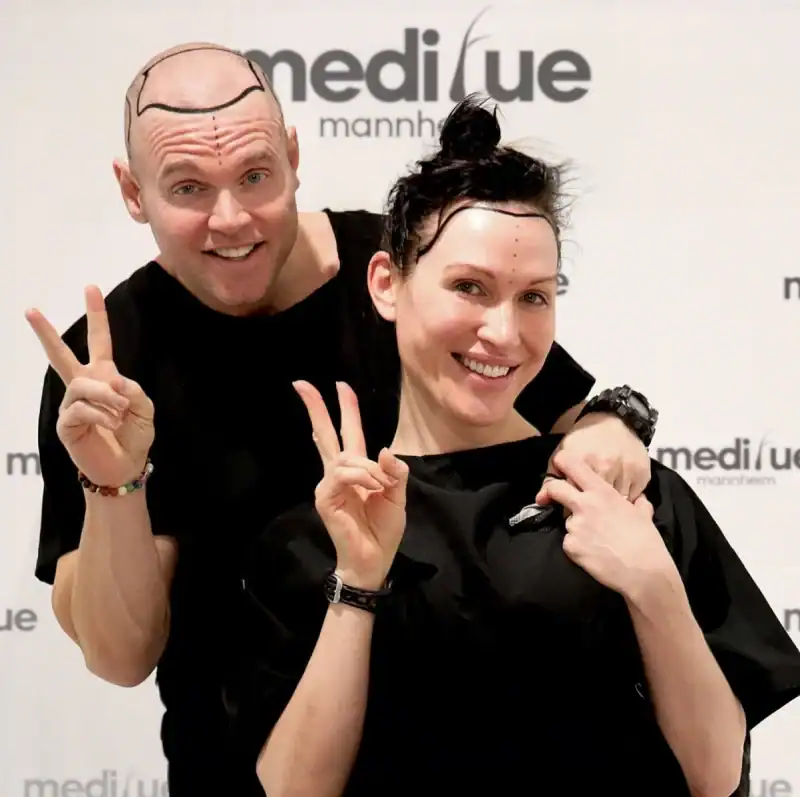
The no-shave hair transplant is the ideal solution for women who want to treat hair loss discreetly and without any visible change. With modern methods such as DHI or partially shaved Sapphire FUE, hair follicles are precisely transplanted without cutting the existing hair. Healing takes only a few days, while the final result appears after 12 months – with full density, a natural hairline, and long-lasting hair growth. What does a no-shave hair transplant mean? In a no-shave hair transplant, healthy hair follicles are extracted from a hidden donor area and transplanted into the affected zones without shortening or shaving the entire hair. This keeps the external appearance completely intact, making the method particularly appealing for women. Compared to traditional procedures, this option is visually discreet, easy to integrate into daily life, and achieves the same long-lasting results as a classic hair transplant. 💡In short:No shaving, no style change, no downtime, but full, naturally growing hair with permanent results. How does a no-shave hair transplant work for women? A no-shave hair transplant is a precise, minimally invasive procedure in which individual hair follicles (grafts) are taken from a hidden donor area and implanted directly into the thinning zones without any visible shaving or changes to the external appearance. The process follows clear medical steps: 1. Analysis and individual planning Before the procedure, the doctor analyzes the hair structure, density, and donor quality. The goal is to create an aesthetically harmonious hairline that matches the face and natural hair growth. 2. Extraction of grafts from a hidden area The donor hairs are typically removed from the lower back of the head or the sides, where the existing hair naturally covers the area. This makes the procedure invisible from the outside. 3. Direct implantation with DHI or Sapphire FUE 4. Healing and daily life compatibility The healing time is only a few days. Patients can usually return to work after 2–3 days, as there are no visible traces. 💡Advantage:No style change, no haircut, no visible difference – but full, permanently growing hair. Benefits of a no-shave hair transplant for women The no-shave hair transplant offers many advantages, especially regarding discretion, naturalness, and daily usability. It combines medical precision with aesthetic sensitivity, ideal for women who are professionally active or want to maintain their external appearance. 1. No visible procedure The existing hair remains fully intact, and nobody can tell that a transplant was performed. 2. No full shaving required Only a small donor area is minimally trimmed and hidden by the remaining hair. 3. Socially presentable immediately Since there are no visible traces, patients can return to work or appointments after just a few days. 4. Natural result The transplantation follows the growth direction and structure of the existing hair, creating a harmonious and natural appearance. 5. No emotional burden Many women find shaving emotionally stressful; this method avoids the need entirely. 6. Short healing phase The scalp regenerates within 7–10 days, and swelling or redness fades quickly. Which methods are suitable for a no-shave hair transplant? For women who desire a no-shave hair transplant, two modern techniques are particularly suitable: DHI (Direct Hair Implantation) and Partially Shaved Sapphire FUE. Both provide naturally looking results but differ slightly in technique, effort, and healing time. 1. DHI method (Direct Hair Implantation) In the DHI method, the hair follicles are implanted immediately after extraction using a special Choi pen, without the need for prior channel opening. This technique offers maximum precision, density, and control over the angle of each hair. Ideal for women with long hair, as no extensive shaving is required. 2. Partially shaved Sapphire FUE Here, only small donor areas on the back of the head are trimmed, which remain hidden under the surrounding hair. Using sapphire blades, ultra-fine channels are opened, ensuring fast healing and a natural growth direction. Comparison Table – DHI vs. Sapphire FUE (No-Shave) Criterion DHI Method Sapphire FUE (partially shaved) Shaving Required No Only small donor area Precision of Implantation Very high High Channel Opening Not required With sapphire blades Healing Time 5–7 days 7–10 days Density & Naturalness Maximum Very high Ideal for Women with long hair Women with medium length hair Pain Level Minimal Low Growth Rate 95–97% 90–95% 💡Tip:Both methods deliver excellent results. For long hair, DHI is recommended; for diffuse thinning, Sapphire FUE is ideal. FAQ – Frequently Asked Questions About No-Shave Hair Transplants for Women 1. Is a no-shave hair transplant really possible? Yes. Thanks to modern techniques such as DHI and partially shaved Sapphire FUE, hair follicles can be transplanted without shaving the entire hair. 2. Who is a good candidate for a no-shave hair transplant? Ideal for women with long or medium-length hair who want to maintain their style and keep the procedure discreet. 3. How long does the procedure take? Depending on the area and technique, the procedure takes between 4 and 8 hours. 4. When can you return to work or social activities? After just 2–3 days – since there are no visible traces and the donor area is covered by your own hair. 5. How many grafts can be transplanted without shaving? Usually between 1,000 and 3,000 grafts, depending on donor density and desired result. 6. Is the treatment painful? No. It is performed under local anesthesia and is virtually painless. Mild tension may occur afterward but subsides quickly. 7. How long does healing take? The healing phase lasts 5–10 days, and the transplanted hairs start growing after 3–4 months. 8. When is the final result visible? The final result is visible after about 12 months with denser, healthy hair growth. 9. Are there risks or complications? Only mild redness or crusting, which disappears within a few days. Serious complications are extremely rare. 10. Is the result permanent? Yes. The transplanted follicles come from a donor-resistant area and remain stable for life. Transform your hair today Start your free consultation Experience Medifue’s advanced 3D hair transplant technology. Discover personalized treatment plans and expert guidance tailored to
Best Hair Transplant Method: FUE vs DHI vs FUT Compared
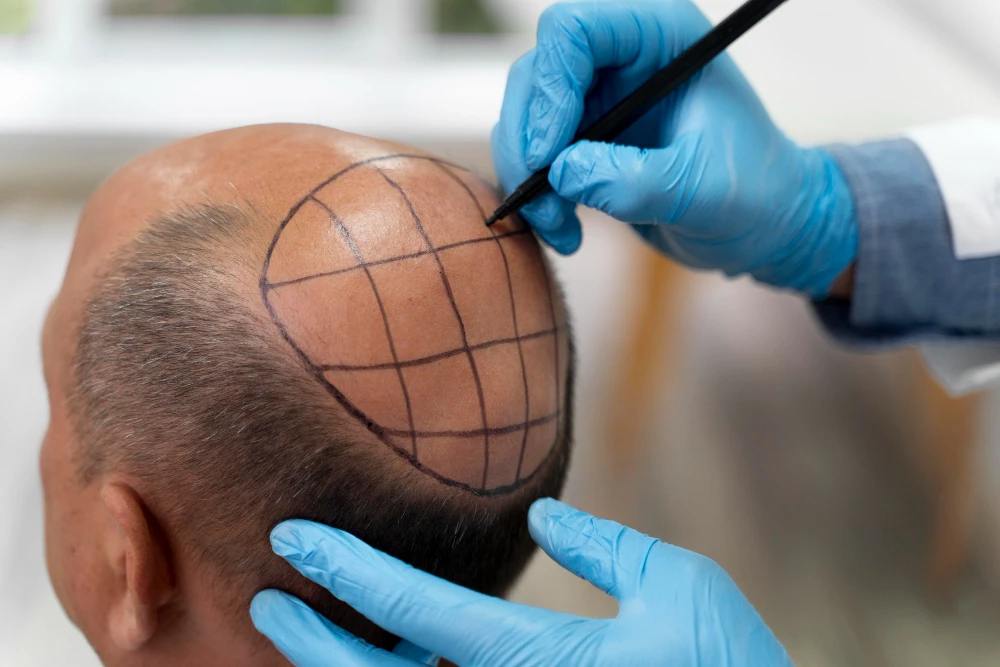
TL;DR: The best hair transplant method depends on your individual situation. FUE delivers natural-looking results and fast healing, DHI offers maximum precision for hairline design, while FUT can be useful in cases of very advanced hair loss. In modern clinics such as Medifue, FUE and DHI are primarily used with a success rate of over 90%, minimal scarring and permanently dense hair growth. Which hair transplant methods are available? In a hair transplant, healthy hair follicles are removed from a donor area (usually at the back of the head) and transplanted into thinning or bald areas. Today, several techniques are available that differ in precision, healing time and scarring. 🔹 FUE (Follicular Unit Extraction) The FUE method is considered the modern standard in hair transplantation. Individual hair follicles are removed manually or with a micromotor and implanted into tiny channels. The procedure is minimally invasive and leaves no visible scars ideal for short hairstyles and natural results. Advantages: 🔹 DHI (Direct Hair Implantation) The DHI technique is a further development of the FUE method. The difference: the extracted grafts are implanted directly with an implanter pen (Choi pen) without prior channel opening. This allows highly precise control of the direction, depth and angle of each individual hair. Advantages: 🔹 FUT (Follicular Unit Transplantation) The FUT method, also known as the strip method, was the long-time standard in hair transplantation. A strip of skin containing hair follicles is removed from the donor area, then dissected into small grafts and implanted. Advantages: Disadvantages: Modern clinics including Medifue mainly use FUE and DHI, as these methods offer natural results with minimal strain on the scalp. FUE vs DHI vs FUT – comparison of results, healing & scarring Each hair transplant method has its own strengths and limitations. The comparison below shows the key differences in terms of results, healing time, scarring and graft survival rate (LSI: hair transplant success rate, FUE DHI FUT comparison, healing time, scarring). Criterion FUE DHI FUT Technique Individual extraction & implantation Direct implantation with Choi pen Strip of skin removed Scarring No visible scars No visible scars Linear scar at the back of the head Healing time 7-10 days 5-7 days 2-3 weeks Pain / comfort Minimal Very low Moderate, due to stitches Success rate (graft survival) 90-95% 92-96% 85-90% Density / naturalness High Very high Medium Best suited for Mild to advanced hair loss Precise hairlines, smaller areas Very large graft numbers Cost factor Medium High Lower Most often recommended by Modern clinics Premium treatments Traditional approaches 💡 Short summary: In modern clinics such as Medifue, FUE or DHI are usually recommended, as they offer the best balance between natural look, healing and long-term success rate. Which method is best for you? The “best” hair transplant method depends not only on the technique, but also on your individual conditions and goals. Every patient brings different features hair density, structure, skin type and expectations for the final result. Below is an overview of which method is best suited for which situation: If you want natural results with short healing time → FUE The FUE method is ideal if you want quick recovery, minimal scarring and a natural appearance. It is especially popular with working patients who want to be socially presentable again within a few days. FUE offers a strong balance between naturalness, safety and success rate. If you want precise hairlines or to treat small areas → DHI The DHI technique is perfect for patients who want targeted corrections for example at the hairline, temples or beard. Through direct implantation with the Choi pen, the doctor controls the direction and depth of each individual hair. DHI stands for maximum precision and an even distribution of density ideal for detailed work. If you need to cover a very large area → FUT The FUT method can be useful if many thousands of grafts are needed. It is often used in men with severe, advanced hair loss who are not concerned about the linear scar at the back of the head. Even though FUT is used less frequently today, it can still deliver good results when properly planned. The key factor: experience and planning Regardless of the method, success always depends on the experience of the medical team and individual planning. A well-performed FUE can deliver better results than a poorly executed DHI and vice versa. That’s why choosing the right clinic is often more important than choosing the method itself. Why experience matters more than the technique Many patients focus solely on the method when choosing a hair transplant FUE, DHI or FUT. In practice, however, it is not the technique alone that determines success, but above all the experience and precision of the medical team. 🔹 Technique is the tool experience is the art Even the most modern method will not deliver perfect results if it is not applied correctly. An experienced specialist knows how to: Experience determines whether the result looks “good” or “perfectly natural”. 🔹 Individual planning is crucial At Medifue, every treatment starts with a detailed analysis: hair density, structure, scalp condition and hair growth direction are carefully assessed. This ensures that the chosen method FUE, DHI or FUT matches the patient’s needs exactly. Advantages of individual planning: 🔹 Teamwork & aftercare A hair transplant is not a one-time event, but a process. At Medifue, experienced specialists accompany patients from preparation through to aftercare. Follow-up appointments, monitoring of the healing process and care recommendations help ensure that the success rate remains consistently above 90%. This combination of expertise, precision and close follow-up is what makes the difference between average and excellent results. Conclusion making the right choice with Medifue Choosing the best hair transplant method is always an individual decision. Whether FUE, DHI or FUT what matters is that the treatment matches your hair type, expectations and lifestyle. Modern techniques such as FUE and DHI today offer outstanding success rates, short healing times and natural results when performed by experienced specialists. 🔹 Why
Best Age for a Hair Transplant: When Is the Right Time?

TL;DR: The ideal age for a hair transplant is between 25 and 35 years, when hair loss is stable and no rapid changes are occurring anymore. Under 23, the procedure is usually not recommended, as hormonal fluctuations and active hair loss can negatively affect the result. What matters is not age alone, but stability, donor quality and an individual medical assessment these guarantee long-term natural results. The right age for a hair transplant Can you have a hair transplant at 20? As a rule, no. At 20, androgenetic hair loss is often still in an active phase. A transplant at this age can lead to uneven results, as hair loss may continue to progress. Medical monitoring and, if necessary, treatment with Minoxidil or Finasteride are recommended before considering a transplant. Can you have a hair transplant at 21? Only in exceptional cases. If hair loss is very localized (e.g. only at the hairline) and has remained stable for more than a year, a small procedure may be possible. Most experts, however, advise waiting until hair loss has fully stabilized. Can you have a hair transplant at 22? 22 is a borderline age for some patients, a transplant can already be safe if medically confirmed that hair loss is stable. Beforehand, there should always be a trichological analysis and hormonal evaluation. 💡Tip: Anyone planning a transplant at this age should choose an experienced clinic that is specialized in young patients. Can you have a hair transplant at 23? From around 23 years, a hair transplant becomes realistic for many men. If hair loss has been stable for at least 12 months, a small to medium-sized transplant (e.g. 2,000-3,000 grafts) can be successfully performed. The doctor will first check whether hormonal fluctuations are still present. Can you have a hair transplant at 24? Yes, suitable in many cases. If hair loss is clearly defined and the donor area is strong, a permanent hairline can be created from age 24 onwards. In particular, FUE and Sapphire FUE methods deliver very natural results here. Can you have a hair transplant at 25? Yes, this is the ideal starting age for many patients. Hair loss is often stable, the hairline is defined, and donor hairs are strong enough for a permanent result. Doctors particularly recommend hair transplants from 25 onwards, as the risk of further progression is significantly lower. Can you have a hair transplant at 26? Yes, very suitable. At this age, modern techniques such as Sapphire FUE or DHI can achieve a natural, stable hairline. Hormonal influences are usually balanced, which makes the result safer in the long term. Can you have a hair transplant at 27? Definitely yes. At 27, most men have stable hair loss patterns, which allows for precise planning and lasting results. Many clinics see this age as an optimal time for a first or even second procedure. Can you have a hair transplant at 28? Yes, 28 is an excellent age for a hair transplant. The donor area is usually strong, and post-procedure hair growth is fast and even. In addition, expectations at this age are generally realistic and medically achievable. Can you have a hair transplant at 29? Yes, without restrictions. Hormonal status is stable, and results are predictable. Especially when combined with ongoing treatments (e.g. PRP or Minoxidil), density can be improved in the long term. Can you have a hair transplant at 30? Yes, this is one of the best age windows overall. At 30, the hair pattern is usually fully developed and hair loss has slowed down. At this age, planning, density and natural results tend to be particularly successful. 💡Conclusion: Between 25 and 35 years, the success rate of a hair transplant is highest the combination of stable hair loss and healthy donor hair delivers the best results. What is the best age for a hair transplant? On average, the ideal age for a hair transplant is between 25 and 45 years. In this period, hair loss is usually stable, the hair is genetically establishedand the scalp is elastic enough for a successful transplant. Patients under 23 often still show hormonal fluctuations, which can cause new bald areas to form after the procedure. For older patients (over 45), a hair transplant is still possible, but donor density and healing time must be assessed individually. 💡Expert recommendation: The ideal time is reached when hair loss has been stable for at least 12 months and the donor area provides enough grafts for natural density. Why is stability so important? Having a hair transplant too early can lead to aesthetic problems: if hair loss continues to progress, transplanted hairs remain while surrounding areas keep thinning the result looks unnatural. This is why specialists always assess the long-term stability of hair loss before the procedure. Factors to consider in younger patients A hair transplant in young men (under 25) requires particular caution. At this stage of life, hormonal status is changing and genetic hair loss can still progress unpredictably. A thorough medical assessment is therefore essential before making a permanent decision. 1. Active hair loss In younger patients, hair loss is often still active. If a transplant is performed during this phase, hair loss may continue after surgery which can later lead to uneven density or new bald areas. Therefore, progression should first be stabilized, for example with Finasteride or Minoxidil. 2. Genetic and hormonal stability Hormonal factors such as DHT (dihydrotestosterone) influence how strongly and how quickly hair loss progresses. A hair analysis or blood test shows whether hair loss has already entered a stable phase. 3. Managing expectations Younger patients often have very high expectations for example, an extremely dense hairline or a result like at age 18. Education is important here: the goal is a natural, age-appropriate appearance, not an unrealistic restoration of teenage hair. 4. Long-term planning A hair transplant should always be planned with the long term in mind. This means the doctor does not only plan the current treatment, but
Second Hair Transplant: How Often Can You Get a Hair Transplant?
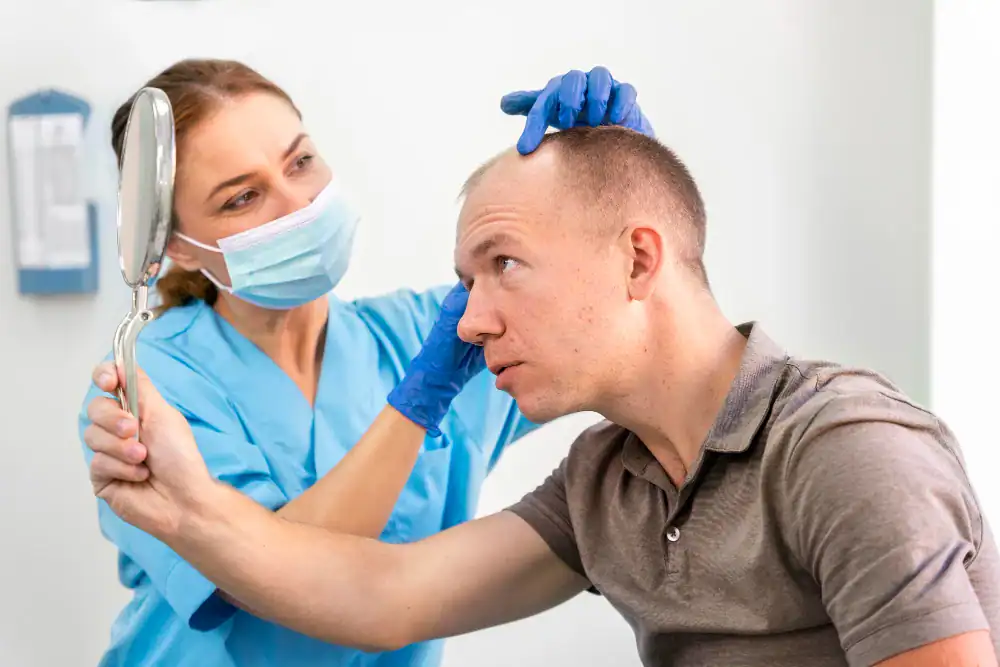
TL;DR: Yes, a hair transplant can be performed a second or even a third time if the donor area still has enough healthy hair follicles. A repeat procedure makes sense in cases of progressive hair loss, insufficient density or to correct the hairline. There should be at least 12-18 months between two procedures to give the scalp time to regenerate. With professional planning and sufficient donor reserves, a second hair transplant can deliver permanent, natural-looking results. When is a second hair transplant necessary? A second hair transplant is usually considered when the density after the first procedure does not meet expectations or when genetically determined hair loss has continued over time. Uneven results, visible transitions or a hairline that is too high can also be reasons for a corrective procedure. Typical situations in which a second procedure is useful: 💡 Note: A secondary transplant should only be carried out once the first procedure has fully healed and the final result is visible usually after 12 months. How many times can you have a hair transplant? In principle, a hair transplant can be performed several times, as long as the donor area (usually at the back of the head) still has enough healthy hair follicles. The number of possible procedures therefore depends directly on the individual donor density. On average, a healthy donor area provides around 6,000 to 7,000 extractable grafts. If, for example, 3,000-3,500 grafts were harvested during the first procedure, there is usually still enough reserve for a second and, in rare cases, even a third transplant. Procedure Possible number of grafts Typical interval Comment 1st transplant 2,500-3,500 grafts – Standard procedure 2nd transplant 1,500-3,000 grafts After 12-18 months Densification or correction 3rd transplant 800-1,500 grafts Only possible with very strong donor area Rarely necessary 💡 Tip: There should be at least 1 year between two procedures,so that the scalp can regenerate and blood circulation can normalize. Factors that influence repeat procedures Risks and limitations of a second hair transplant A second hair transplant is generally possible, but it comes with particular challenges. Depending on the condition of the scalp and the donor area, surgeons must plan more carefully to avoid complications and achieve an aesthetically harmonious result. Possible risks Limits of repeat procedures A second or third hair transplant is subject to natural limits: ⚠️ Note: If the donor area is weak, a secondary transplant can do more harm than good. In such cases, PRP or hair-thickening treatments are often a better alternative. How does a corrective or secondary transplant work? A secondary transplant follows a similar process to the first hair transplant, but is planned more precisely because already transplanted areas must be taken into account. The goal is to increase density, correct uneven resultsor create a more natural hairline. 1. Analysis of the first result First, the doctor assesses the result of the initial procedure: 💡 Tip: High-resolution trichoscopy helps distinguish between strong and weak follicles. 2. Planning the secondary transplant Based on the analysis, it is decided how many new grafts are needed and which method is most suitable often Sapphire FUE or DHI. The new hairline is adapted to the existing one to create a harmonious overall appearance. 3. Extraction and transplantation The extraction is carried out from donor areas at the back of the head or sides that have not yet been used. Maximum precision is required to avoid damaging existing follicles. The new grafts are placed into existing channels or finely distributed micro-channels so that the transitions remain invisible. 4. Aftercare and healing phase After the procedure, similar rules apply as after the first transplant: Healing often progresses faster, as the scalp is already familiar with the process. When is a repeat hair transplant worthwhile? A second hair transplant is worthwhile if hair loss has progressed, the density is insufficient or the first result is not aesthetically satisfactory. In such cases, a targeted secondary transplant can significantly improve the overall appearance. However, the procedure should only be carried out if the medical conditions are right in other words, if there is a stable donor area and the scalp has fully healed. Typical reasons why a repeat hair transplant is worthwhile: 💡 Recommendation: A repeat hair transplant only makes senseif it serves to improve an existing result not to meet unrealistic expectations. Alternatives when donor hair is weak If the donor area no longer offers enough grafts,various non-surgical solutions are available: FAQ – Frequently asked questions about a second hair transplant 1. How long should you wait between two hair transplants? There should be at least 12 to 18 months between two procedures, so that the scalp can fully recover and blood circulation can stabilize. 2. Is a third hair transplant possible? Yes, but only if the donor area is still sufficiently dense. A third procedure is rarely necessary and should only be considered after a thorough analysis. 3. Can you change the hair transplant method for the second procedure (e.g. FUE → DHI)? Yes. Many patients opt for Sapphire FUE or DHI for their second procedure in order to achieve more precise results or higher density. 4. Is healing more difficult after the second hair transplant? Not necessarily. Healing can even be faster if the scalp is healthy and well supplied with blood. Only in the presence of scars or very thin skin can recovery take a little longer. 5. Is a secondary transplant more painful than the first? No, both procedures are performed under local anesthesia and are almost painless. After the procedure, you may feel a slight tightness, which usually disappears after a few days. 6. How much does a second hair transplant cost? In Germany, the average cost ranges between €3,000 and €6,000, depending on the method used (FUE, Sapphire FUE, DHI) and the number of grafts. 7. When will you see the result of a second hair transplant? New hair growth starts again from around the 3rd month. After 6 months, a clearly visible result can be
Female Hair Transplant Before & After Results in Germany
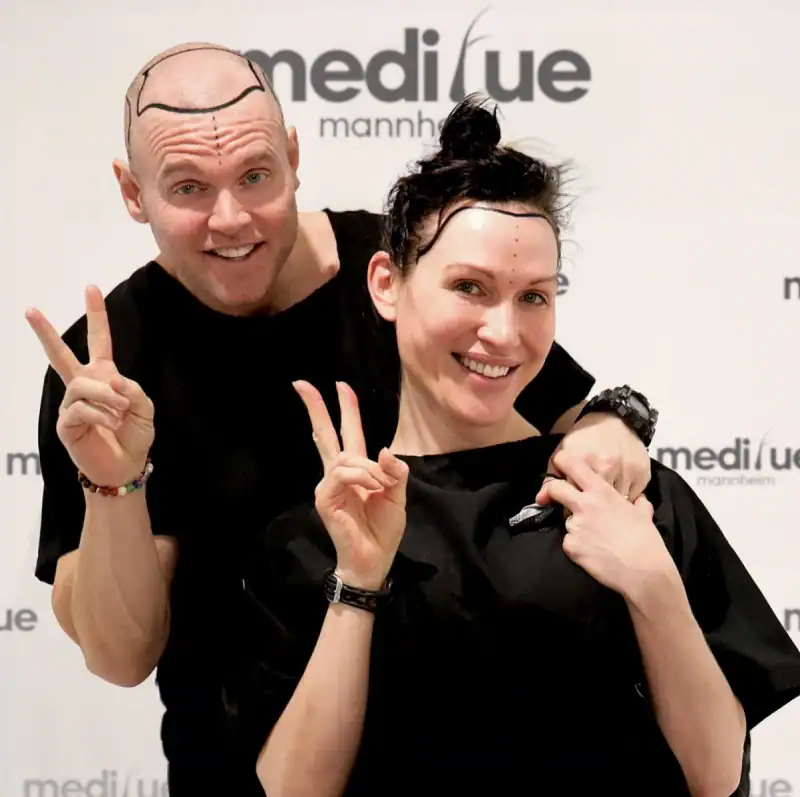
TL;DR: A hair transplant for women in Germany is a permanent solution against hair loss, especially in cases of diffuse thinning or a receding hairline. With modern methods such as FUE, Sapphire FUE or DHI, natural results without shaving can be achieved. Healing takes around two weeks, first results are visible after 3-4 months, and the final result after 12 months with denser, healthy and naturally growing hair. Why women consider a hair transplant Hair loss no longer affects only men; around 40% of all women experience visible hair loss over the course of their lives. Hormonal changes (e.g. after pregnancy or during menopause), stress, genetic predisposition or metabolic disorders can lead to diffuse thinning or bald patches. Unlike men, women rarely lose all their hair, but rather density and volume in specific areas most often at the frontal hairline, the parting or the temples. A hair transplant offers a permanent solution here by transplanting healthy follicles from the back of the head into the affected areas. 💡Important:For women, an accurate diagnosis is crucial only those who have a stable hair root structure benefit from the transplant in the long term. How does a hair transplant for women work? The process of a hair transplant in women differs slightly from that in men, as the goal is usually building volume and improving density rather than reconstructing a completely bald area. The procedure is minimally invasive, performed under local anesthesia and takes 4-8 hours, depending on the size of the area. 1. Hair analysis and planning Before treatment, the scalp is examined using trichoscopy to determine hair density, thickness and donor quality. The doctor individually defines the hairline and transplantation zones. 2. Extraction of the grafts (donor area) Healthy hair follicles are extracted from the back or sides of the head. Depending on the method: 3. Implantation into the recipient area The follicles are placed precisely into the thinned areas, taking into account growth direction, depth and natural density. In women, the aim is an even, aesthetically pleasing distribution of volume. 4. Healing and growth phase Hair transplant in women before and after example from practice These before-and-after images show the natural course of a hair transplant in women from planning and the healing phase through to the final result after several months. The transformation illustrates how precisely a modern transplant can restore the hairline and create a harmonious overall appearance. 📍 Before (planning phase) The first image shows the patient before the operation. The future hairline is marked to plan the shape and symmetry individually. 📍 Directly after the transplant (day 1) The second image documents the condition immediately after the operation. The transplanted grafts are visible; the redness is part of the normal healing process. 📍 After several months (final result) The third image shows the result after complete healing. The hairline looks natural, the volume has built up evenly and the patient shows significantly fuller, more harmonious hair. 💡Note: All results come from real treatments and show that a carefully planned hair transplant in women delivers permanently natural outcomes. What results can be expected after a hair transplant in women? A hair transplant in women delivers permanent and natural results when the procedure is carefully planned and professionally performed. The transplanted hair follicles come from the donor-resistant area at the back of the head and are therefore insensitive to hormonal hair loss. The healing and growth process takes place in several clearly defined phases: Growth progression after the hair transplant Month Change Description 1-2 Healing phase Mild redness, scab formation, first new hairs visible 3-4 Shock loss phase Transplanted hairs shed temporarily (normal cycle) 5-6 First results New hairs grow back finer and evenly 7-9 Density build-up Visible thickening, more even growth 10-12 Final result Full volume, stable hairline, permanent outcome Success rate and permanence Factors that influence the result FAQ – frequently asked questions about hair transplant for women 1. Is a hair transplant in women just as effective as in men? Yes. The only difference lies in the type of hair loss. With stable hormonal conditions, a hair transplant in women achieves equally permanent results as in men. 2. When will I see the first results? After about 3-4 months, the transplanted hairs begin to grow. The full result is visible after 12 months. 3. Do women have to shave their head before the hair transplant? No. With the DHI or partially shaven FUE method, the existing hair can be preserved. This keeps the outward appearance discreet during treatment. 4. How many grafts are transplanted in women on average? Usually between 1,500 and 3,000 grafts, depending on the size of the affected area and the desired density. 5. Is a hair transplant possible in cases of hormonal hair loss? Yes, but only if the hormonal cause has been stabilized or treated. A medical evaluation should take place beforehand to ensure permanent results. 6. How long does healing take after the hair transplant? The scalp heals within 10-14 days. After 4 weeks, the healing process is complete and the transplanted follicles begin to anchor themselves. 7. Are there any risks or side effects? Mild redness, swelling or scab formation is normal. Serious complications are very rare when the procedure is carried out professionally. 8. Can I dye or style my hair after the transplant? Yes, but only after 6-8 weeks, so that the hair follicles are fully stabilized. 9. Is a hair transplant useful in cases of diffuse hair loss? Yes, as long as the hair loss is not actively progressing and sufficient donor hair is available. 10. How long does the result last? Permanently. The transplanted hairs come from a donor-resistant area and are preserved for life. Transform your hair today Start your free consultation Experience Medifue’s advanced 3D hair transplant technology. Discover personalized treatment plans and expert guidance tailored to your needs and your hair restoration goals. Book consultation
Hair Transplant Before After Cases
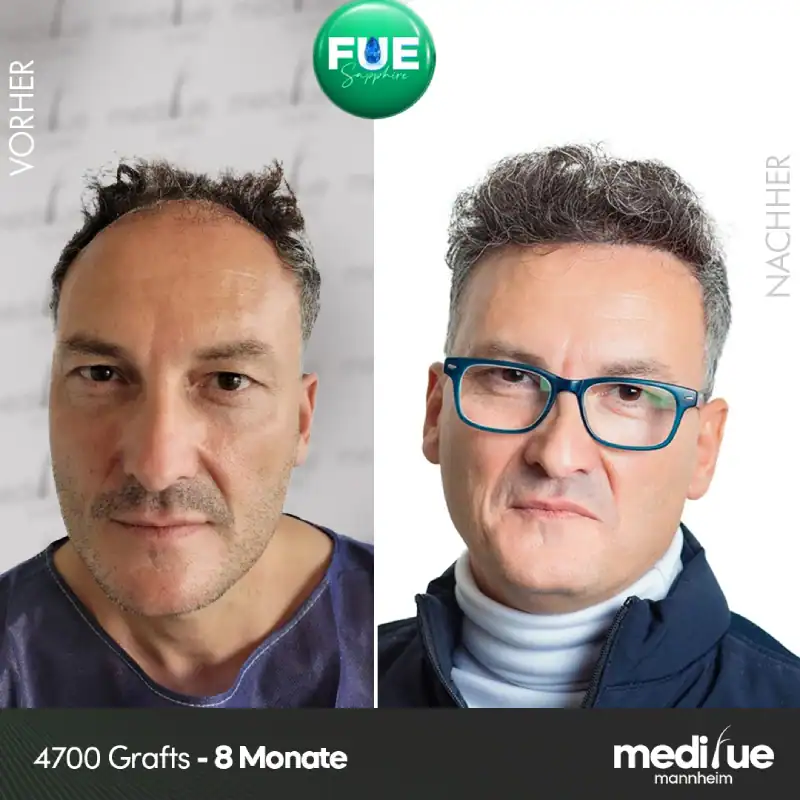
TL;DR: A hair transplant can permanently improve appearance and self-confidence. In this article, you will see real before and after results of Medifue patients in Germany performed with modern methods such as FUE, Sapphire FUE and DHI. The photos show how natural hairlines, high density and long-term results are achieved through precise planning and professional aftercare. Every treatment is individual the result: full hair and renewed confidence. Why Are Hair Transplant Before and After Photos So Important? Before and after photos are essential for anyone interested in a hair transplant.They not only build trust but also show what is realistically possible. 🔹 1. Trust & Transparency Real photos from the clinic prove the technical precision and experience of the treating team. No marketing promise can replace an authentic result photo. 🔹 2. Realistic Expectations Every scalp, every donor area and every healing process is individual. Photos show which results are achievable with different hair types, densities and methods. 🔹 3. Motivation & Self-Confidence Many patients report that seeing other before and after results gave them the courage to take the step. Visible success creates confidence. Real Hair Transplant Before and After Results Below you will find documented results of different patients – performed with various techniques and graft counts. Patient 1 – Recovery Phase After Hair Transplant Up to 1 Year This image series shows the typical healing process: Patient 2 – 5700 Grafts Hair Transplant Before and After (Mannheim) Extensive hair loss was successfully treated here with 5700 grafts. Both the front and the crown were fully reconstructed. The Sapphire FUE method enabled high density and a precise, natural hairline. Patient 3 – 4350 Grafts Hair Transplant Before and After (Sapphire FUE, 7-Month Result) For this patient, the Sapphire FUE method was used. After just 7 months, a dense, even hairline with a natural transition to the forehead can be seen. The hair structure appears strong and the growth harmonious – an aesthetic, realistic result. Patient 4 – 4400 Grafts Hair Transplant Before and After (FUE, 7-Month Result) With 4400 grafts, the upper frontal zone and the crown were treated. After 7 months, a clear thickening is visible. This result shows how efficiently the FUE technique can work for moderate hair loss. Patient 5 – 4100 Grafts Hair Transplant Before and After (11-Month Result, Mannheim) After 11 months, natural hair growth is fully restored. The transitions are soft and the density is even. This example shows that patience is crucial – the final result unfolds after around one year. Patient 6 – 4700 Grafts Hair Transplant Before and After (DHI, 11-Month Result) Here, the DHI technique was used, in which each hair is implanted individually. The result after 11 months convinces with natural growth direction and high density – especially in the frontal and crown area. An excellent demonstration of DHI precision. Which Factors Influence the Result of a Hair Transplant? A natural, permanent result does not only depend on the chosen method, but also on individual and medical factors. Below are the most important influences: 🔹 1. Number of Grafts Depending on the extent of hair loss, between 3000 and 6000 grafts are transplanted.More grafts usually mean higher density, but the quality of the extracted follicles is crucial. 🔹 2. Transplantation Technique 🔹 3. Experience of the Doctor The natural hairline, growth direction and density depend heavily on the aesthetic expertise of the treating team. An experienced doctor knows how to place hairs to create a harmonious result. 🔹 4. Aftercare & Healing Phase Aftercare has a significant impact on the final result.Key points: 🔹 5. Individual Factors Conclusion: A hair transplant is teamwork between doctor and patient. The better the preparation and aftercare, the more convincing the result. Why Medifue Is the Right Choice Medifue is one of the leading providers of hair transplants in Germany. The company combines medical precision with many years of experience and individual care. Modern Techniques Medifue offers FUE, Sapphire FUE and DHI at the latest technological standard.Each treatment is individually planned – based on hair structure, hair loss pattern and the patient’s wishes. Experienced Specialists The doctors at Medifue have performed thousands of successful procedures.Their expertise guarantees natural-looking results and maximum hair density. Real Before and After Results All images shown in this article come from real Medifue treatments in Cologne and Mannheim. Transparency, authenticity and trust are the top priority. Comprehensive Care From the first online consultation to the follow-up check, Medifue supports every step personally.Each patient receives an individual aftercare plan to ensure the best possible final result. Transform your hair today Start your free consultation Experience Medifue’s advanced 3D hair transplantation technology. Discover personalised treatment plans and expert guidance tailored to your needs and hair restoration goals. Book consultation
Hair Transplant Costs – Prices in Germany 2026
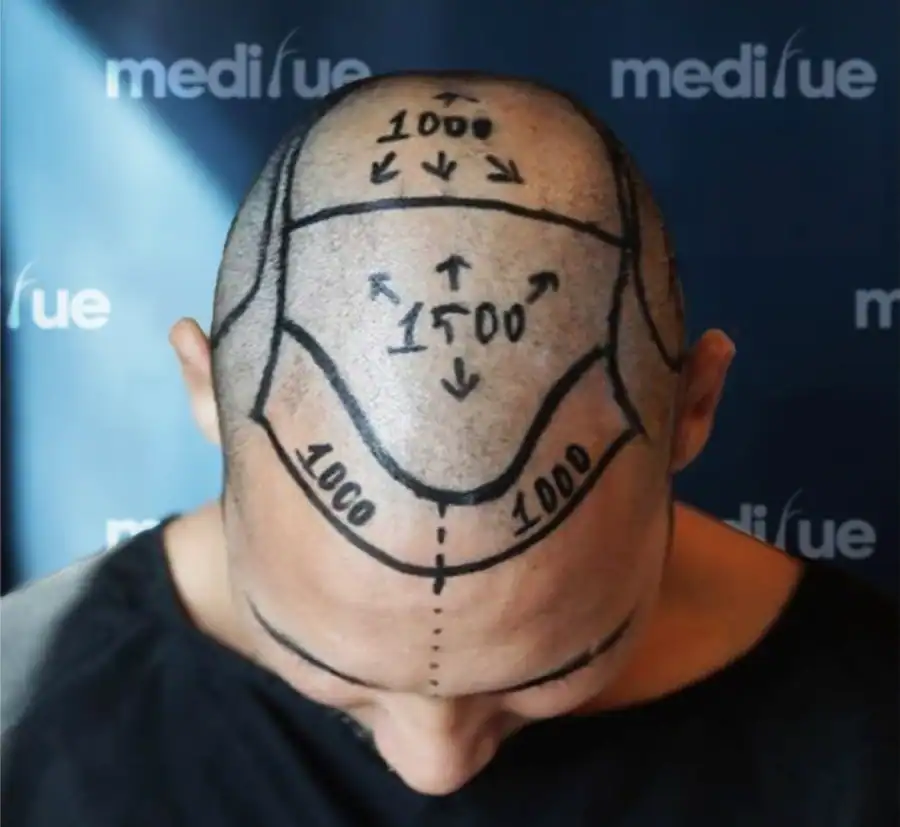
TL;DR: Hair transplant costs in Germany in 2026 range between €3,500 and €15,000, depending on the method, clinic and number of grafts. The Sapphire FUE technique offers an optimal price-performance ratio with natural results starting from around €4,000, while the DHI method stands out for maximum precision and unshaven procedures but starts from €5,500. Medifue Germany combines cutting-edge technology, experienced specialists and transparent pricing to provide patients with high-quality Sapphire FUE and DHI hair transplants directly in Germany – safe, effective and fairly priced. Hair Transplant in Germany – What Influences the Costs? The cost of a hair transplant depends on several key factors. In Germany, the most important cost drivers are: A high-quality hair transplant should be seen as a medical investment that guarantees natural and long-lasting results. Hair Transplant Costs in Germany Table 2026 – By Number of Grafts and Method The cost of a hair transplant in Germany strongly depends on the number of grafts and the chosen method. The more grafts are transplanted, the higher the overall price – however, the price per graft decreases as the number increases. Below you will find the average 2026 prices for Sapphire FUE and DHI in Germany (based on a clinic and market analysis). Number of grafts Sapphire FUE (Ø price) DHI (Ø price) Price range (Germany 2026) 1000 grafts ~€4.000 ~€5.500 €3.500 – €6.000 2000 grafts ~€6.000 ~€8.000 €5.000 – €9.000 3000 grafts ~€7.500 ~€9.500 €6.500 – €10.500 4000 grafts ~€8.500 ~€10.500 €7.000 – €11.500 5000 grafts ~€9.500 ~€12.000 €8.000 – €13.000 6000 grafts ~€10.500 ~€13.000 €9.000 – €14.000 7000 grafts ~€12.000 ~€14.500 €10.000 – €15.000+ 💡 Note: Prices vary depending on location, doctor and aftercare services. Premium clinics such as Elithair (Berlin) or KÖ-HAIR (Düsseldorf) are at the upper end of the range. 1000 Grafts Hair Transplant Costs 2026 Ideal for small bald spots or hairline corrections. 2000 Grafts Hair Transplant Costs 2026 Recommended for moderate hair loss in the frontal area. 3000 Grafts Hair Transplant Costs 2026 Covers the frontal hairline plus a mild crown area. 4000 Grafts Hair Transplant Costs 2026 Comprehensive transplantation for larger areas. 5000 Grafts Hair Transplant Costs 2026 Complete reconstruction of the front and crown. 6000 Grafts Hair Transplant Costs 2026 Extended transplantation, often performed in two sessions. 7000 Grafts Hair Transplant Costs 2026 For very large bald areas; usually combined (2 sessions). Why Medifue? – High-Quality Sapphire FUE and DHI Results at a Fair Price Medifue Germany is a clinic specialised in modern hair transplantation with international experience and the highest medical standards. With an experienced medical team, cutting-edge technology and patient-centred service, Medifue offers individually planned treatments with Sapphire FUE and DHI technique – directly in Germany. What Sets Medifue Apart Your Benefits at a Glance Transform your hair today Start your free consultation Experience Medifue’s advanced 3D hair transplantation technology. Discover personalised treatment plans and expert guidance tailored to your individual needs and hair restoration goals. Book consultation