TL;DR: The best hair transplant method depends on your individual situation. FUE delivers natural-looking results and fast healing, DHI offers maximum precision for hairline design, while FUT can be useful in cases of very advanced hair loss. In modern clinics such as Medifue, FUE and DHI are primarily used with a success rate of over 90%, minimal scarring and permanently dense hair growth.
Which hair transplant methods are available?
In a hair transplant, healthy hair follicles are removed from a donor area (usually at the back of the head) and transplanted into thinning or bald areas. Today, several techniques are available that differ in precision, healing time and scarring.
🔹 FUE (Follicular Unit Extraction)
The FUE method is considered the modern standard in hair transplantation. Individual hair follicles are removed manually or with a micromotor and implanted into tiny channels. The procedure is minimally invasive and leaves no visible scars ideal for short hairstyles and natural results.
Advantages:
- No linear scar
- Fast healing (7-10 days)
- Very high success rate (90-95%)
- Natural hairline and even density
🔹 DHI (Direct Hair Implantation)
The DHI technique is a further development of the FUE method. The difference: the extracted grafts are implanted directly with an implanter pen (Choi pen) without prior channel opening. This allows highly precise control of the direction, depth and angle of each individual hair.
Advantages:
- No separate channel opening step required
- Shorter procedure time
- Ideal for precise hairlines and smaller areas
- Minimal bleeding, faster healing
🔹 FUT (Follicular Unit Transplantation)
The FUT method, also known as the strip method, was the long-time standard in hair transplantation. A strip of skin containing hair follicles is removed from the donor area, then dissected into small grafts and implanted.
Advantages:
- Suitable for very large graft numbers (over 4,000)
- Shorter extraction time
Disadvantages:
- Visible linear scar at the back of the head
- Longer healing time
- Less suitable for patients who prefer short hair
Modern clinics including Medifue mainly use FUE and DHI, as these methods offer natural results with minimal strain on the scalp.
FUE vs DHI vs FUT – comparison of results, healing & scarring
Each hair transplant method has its own strengths and limitations. The comparison below shows the key differences in terms of results, healing time, scarring and graft survival rate (LSI: hair transplant success rate, FUE DHI FUT comparison, healing time, scarring).
| Criterion | FUE | DHI | FUT |
| Technique | Individual extraction & implantation | Direct implantation with Choi pen | Strip of skin removed |
| Scarring | No visible scars | No visible scars | Linear scar at the back of the head |
| Healing time | 7-10 days | 5-7 days | 2-3 weeks |
| Pain / comfort | Minimal | Very low | Moderate, due to stitches |
| Success rate (graft survival) | 90-95% | 92-96% | 85-90% |
| Density / naturalness | High | Very high | Medium |
| Best suited for | Mild to advanced hair loss | Precise hairlines, smaller areas | Very large graft numbers |
| Cost factor | Medium | High | Lower |
| Most often recommended by | Modern clinics | Premium treatments | Traditional approaches |
💡 Short summary:
- FUE is the most commonly chosen method because it looks natural and requires little downtime.
- DHI offers maximum precision ideal for hairlines and density improvement.
- FUT can be useful for patients with extensive hair loss, but is used less often due to the visible scar.
In modern clinics such as Medifue, FUE or DHI are usually recommended, as they offer the best balance between natural look, healing and long-term success rate.
Which method is best for you?
The “best” hair transplant method depends not only on the technique, but also on your individual conditions and goals. Every patient brings different features hair density, structure, skin type and expectations for the final result.
Below is an overview of which method is best suited for which situation:
If you want natural results with short healing time → FUE
The FUE method is ideal if you want quick recovery, minimal scarring and a natural appearance. It is especially popular with working patients who want to be socially presentable again within a few days.
FUE offers a strong balance between naturalness, safety and success rate.
If you want precise hairlines or to treat small areas → DHI
The DHI technique is perfect for patients who want targeted corrections for example at the hairline, temples or beard. Through direct implantation with the Choi pen, the doctor controls the direction and depth of each individual hair.
DHI stands for maximum precision and an even distribution of density ideal for detailed work.
If you need to cover a very large area → FUT
The FUT method can be useful if many thousands of grafts are needed. It is often used in men with severe, advanced hair loss who are not concerned about the linear scar at the back of the head.
Even though FUT is used less frequently today, it can still deliver good results when properly planned.
The key factor: experience and planning
Regardless of the method, success always depends on the experience of the medical team and individual planning. A well-performed FUE can deliver better results than a poorly executed DHI and vice versa.
That’s why choosing the right clinic is often more important than choosing the method itself.
Why experience matters more than the technique
Many patients focus solely on the method when choosing a hair transplant FUE, DHI or FUT. In practice, however, it is not the technique alone that determines success, but above all the experience and precision of the medical team.
🔹 Technique is the tool experience is the art
Even the most modern method will not deliver perfect results if it is not applied correctly. An experienced specialist knows how to:
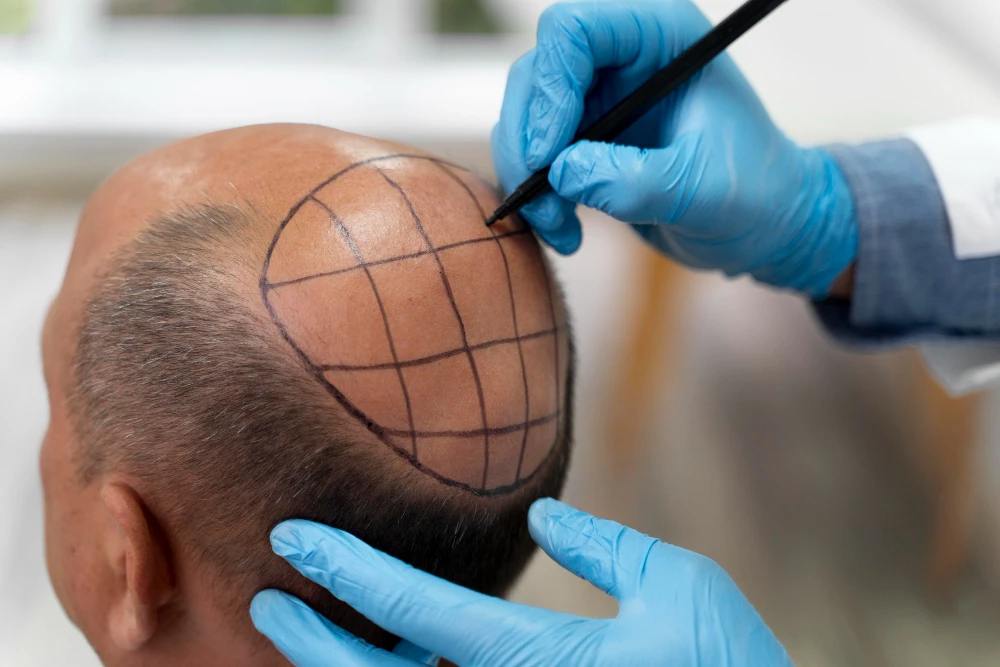
- plan the optimal hairline in an anatomically correct way,
- adapt growth direction and density individually,
- use the donor area efficiently without overharvesting it.
Experience determines whether the result looks “good” or “perfectly natural”.
🔹 Individual planning is crucial
At Medifue, every treatment starts with a detailed analysis: hair density, structure, scalp condition and hair growth direction are carefully assessed. This ensures that the chosen method FUE, DHI or FUT matches the patient’s needs exactly.
Advantages of individual planning:
- Natural-looking hairline
- Even density without overloading the donor area
- Sustainable results over many years
🔹 Teamwork & aftercare
A hair transplant is not a one-time event, but a process. At Medifue, experienced specialists accompany patients from preparation through to aftercare. Follow-up appointments, monitoring of the healing process and care recommendations help ensure that the success rate remains consistently above 90%.
This combination of expertise, precision and close follow-up is what makes the difference between average and excellent results.
Conclusion making the right choice with Medifue
Choosing the best hair transplant method is always an individual decision. Whether FUE, DHI or FUT what matters is that the treatment matches your hair type, expectations and lifestyle. Modern techniques such as FUE and DHI today offer outstanding success rates, short healing times and natural results when performed by experienced specialists.
🔹 Why Medifue is the right choice
Medifue is one of the leading providers of hair transplantation in Germany and Europe. With over 15 years of experience, state-of-the-art technology and a success rate of over 90%, the team sets high standards in quality and aesthetics.
What makes Medifue stand out:
- Individual analysis & planning
- Procedures performed by experienced specialists
- Use of the latest techniques: FUE, Sapphire FUE & DHI
- Personal aftercare and medical support
Anyone who aims for long-term natural hair and aesthetic density will find a trusted partner with international reputation in Medifue.
FAQ – Frequently asked questions about the best hair transplant method
1. Which method is best for a hair transplant?
The best method depends on your individual needs. FUE is the modern standard with fast healing and natural results. DHI offers maximum precision for hairlines, while FUT is suitable in cases of very extensive hair loss.
2. What is the difference between FUE and DHI?
With the FUE method, channels are opened before implantation, whereas with the DHI technique, grafts are implanted directly with a Choi pen. DHI allows more precise control over hair direction and density, but is usually more time-consuming.
3. Which hair transplant method leaves no scars?
Both FUE and DHI leave no visible scars. With the older FUT method, a linear scar remains at the back of the head because a strip of skin is removed.
4. Which hair transplant method has the highest success rate?
In modern clinics, FUE and DHI reach success rates of over 90%, depending on the doctor’s experience, donor hair density and correct aftercare.
5. How long does healing take after a hair transplant?
After an FUE or DHI procedure, healing usually takes 7 to 10 days. Full regeneration and the final result are visible after about 12 months.
6. Is FUT still recommended today?
FUT is used less frequently today, but remains useful for patients with very advanced hair loss when large graft numbers are needed in a single session. The downside is the visible scar and longer healing time.
7. Why should I choose Medifue?
Medifue combines many years of experience with cutting-edge technology. Patients benefit from individual planning, safe methods (FUE, Sapphire FUE, DHI) and a success rate of over 90% for naturally dense and long-lasting results.